
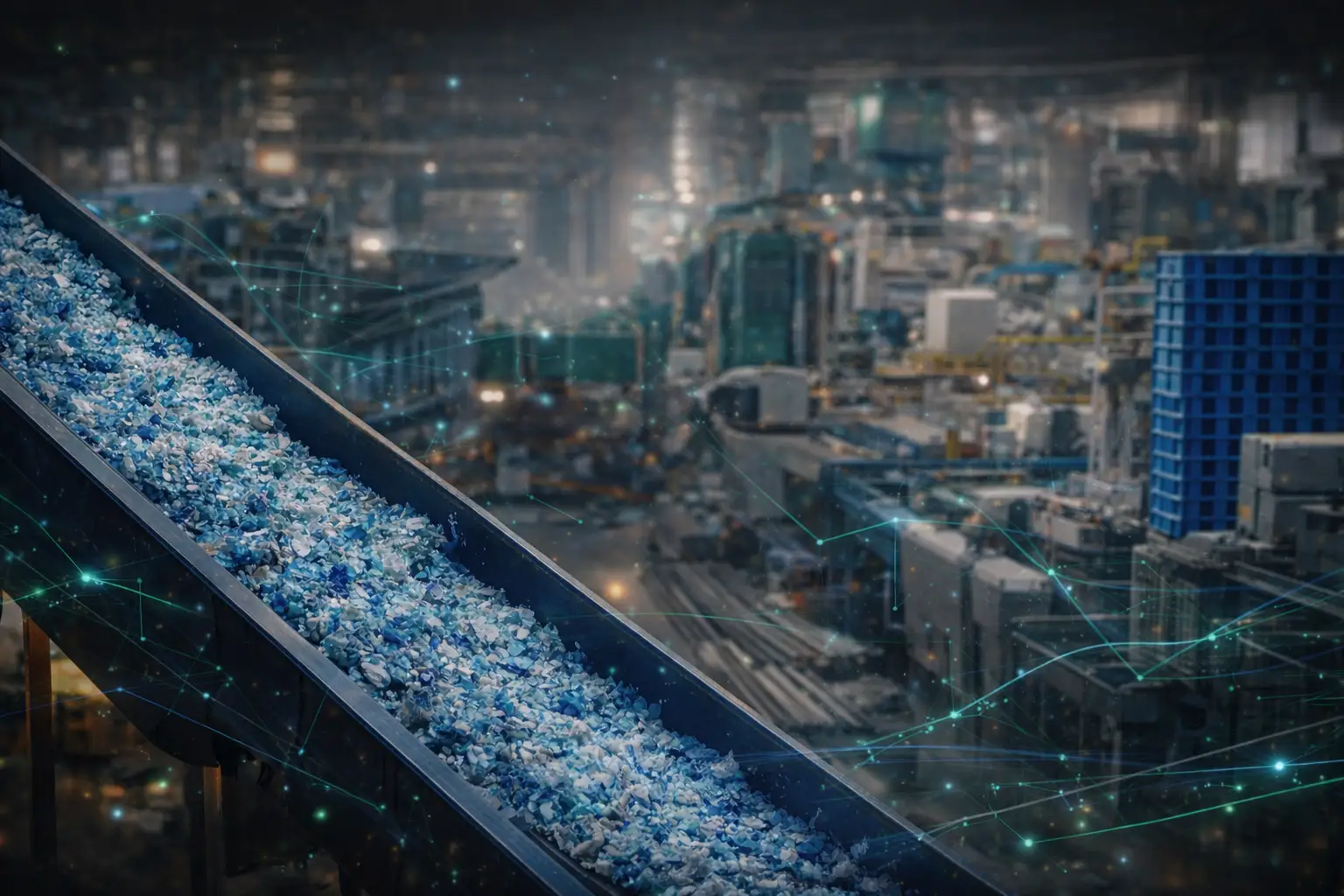

PVC Recycling in the USA Complete Guide to Pipes Profiles Siding Flooring Cable Regrind Compounds and PCR
Polyvinyl chloride is traded under labels such as PVC, vinyl, rigid PVC, flexible PVC, uPVC, regrind, powder, compound and recycled-content material. Those names do not describe one interchangeable commodity. Clean white pipe trim, post-consumer siding, window profile with aluminum, cable-jacket granulate, flexible flooring, roofing membrane and a pelletized recycled compound can differ in polymer chemistry, plasticizer system, stabilizers, fillers, pigments, metal content, heat history and approved end use. A buyer needs a defined feedstock. A seller protects value by documenting the product origin, formulation family, physical form, processing history and measurable quality of each lot.
This guide explains how U.S. factories, recyclers, compounders, construction companies and traders can qualify PVC scrap for mechanical recycling. It covers rigid and flexible vinyl, post-industrial and post-consumer material, pipe and profile scrap, siding, flooring, roofing, wire and cable, separation of aluminum and other metals, testing, pricing, logistics and commercial due diligence. The central purchasing rule is simple: recycled PVC should be matched to a compatible application and formulation window, not bought on resin identification code alone.
What Is PVC
PVC is a thermoplastic based on vinyl chloride polymer. In commercial products, the polymer is combined with stabilizers, lubricants, processing aids, pigments and often fillers. Flexible products may also contain a substantial plasticizer package. The final formulation determines stiffness, hardness, density, color, weatherability, flame behavior, electrical properties, processing response and regulatory suitability. For recycling, the compound history matters almost as much as the polymer identity because additives remain in the recovered material and influence the next product.
The resin identification code number 3 is a packaging identification tool, not a purchase specification or proof of curbside acceptance. PVC is widely used in durable products such as water and sewer pipe, conduit, window frames, siding, flooring, roofing membranes, wall coverings, medical products and cable insulation. Many of these products remain in service for years or decades. As a result, the PVC recycling market has a different collection pattern from bottle-centered PET and HDPE systems: industrial scrap and specialized take-back channels play a major role, while post-consumer building products often arrive through renovation, demolition and distributor networks.
Rigid Flexible PVC CPVC and PVDC Differences
Rigid PVC
Rigid PVC contains little or no intentionally added plasticizer. Pipe, fittings, window profiles, siding, trim board, conduit, sheet, cards and many molded construction products fall into this category. Rigid streams can still differ greatly because calcium carbonate loading, impact modifiers, titanium dioxide, heat stabilizers and pigments change density and performance. White window profile cannot automatically replace pipe compound, and a mixed rigid load should not be represented as a single grade without evidence.
Flexible PVC
Flexible PVC uses plasticizers and other formulation choices to create products ranging from soft film and tubing to resilient flooring, wire insulation and roofing membranes. Shore hardness, plasticizer chemistry, plasticizer level, fillers, reinforcement and service history determine compatibility. Flexible PVC from different applications can produce odor, migration, volatility, surface, electrical or mechanical problems when blended without qualification. Buyers commonly require a narrow source family rather than mixed flexible vinyl.
CPVC PVDC and Other Chlorinated Materials
Chlorinated polyvinyl chloride, or CPVC, is modified for higher-temperature service and is not the same purchasing grade as ordinary PVC. Polyvinylidene chloride, or PVDC, is another chlorinated polymer used in barrier applications. Chlorinated polyethylene may appear as an impact modifier or separate elastomer. These materials can be difficult to distinguish by color or casual inspection. Product markings, supplier records and appropriate analytical screening should support identification before a lot enters a recycled PVC blend.
PVC Recycling Market Snapshot for the 2026 Edition
The Vinyl Institute’s current recycling directory reports that 1.13 billion pounds of PVC were recycled in the United States and Canada in 2024, including 71 million pounds of post-consumer PVC. It also states that nearly 70 percent of PVC has a service life of 15 to 100 years or more. These figures explain why industrial material dominates current recovery and why post-consumer supply often arrives through renovation, infrastructure replacement and specialized collection rather than ordinary curbside programs.
Broader U.S. plastics data provide context. The Association of Plastic Recyclers reported that 5.1 billion pounds of post-consumer plastic were recovered for recycling in the United States in 2024. EPA continues to publish a national goal of increasing the overall recycling rate to 50 percent by 2030. These national figures do not replace PVC-specific qualification. Durable vinyl products, long service lives and formulation diversity mean that reliable recovery grows through controlled industrial programs, construction-product collection, product take-back, verified end markets and specifications that protect compound performance.
The commercial opportunity is strongest where generators can aggregate consistent material. Pipe extrusion trim, window fabrication scrap, siding cutoffs, cable manufacturing scrap, sheet edge trim and off-spec compound can be valuable because the source and formulation are often known. Post-consumer streams can also support useful end markets, but they need more sorting, documentation and testing. A regional supply program should therefore begin with the end-market specification and the generator map, then design collection and processing around those facts.
The Two Main PVC Waste Streams
Post Industrial PVC
Post-industrial PVC is generated before a finished product reaches the end user. Common examples include extrusion start-up, edge trim, punch-outs, offcuts, profile fabrication scrap, pipe and fitting rejects, clean granulator material, coating scrap, cable-jacket trim, flooring production waste, off-spec dry blend, purge and returned compound. Single-source post-industrial material often offers the best traceability. The generator
can identify the resin family, stabilizer package, plasticizer, filler, pigment, manufacturing line and reason for rejection.
A clean production stream is not automatically ready for any PVC application. Heat history, cross-contamination during changeovers, incompatible capstock, printing, adhesives, reinforcement, metal inserts and floor sweepings can affect reuse. The factory should create a separate internal code for every formulation family and keep mixed or uncertain material out of premium bins. Lot records should state whether the scrap is unprocessed, once-ground, reground several times, compounded or exposed to unusual heat.
Post Consumer PVC and PCR
Post-consumer PVC has completed its intended use and entered a collection or recovery system. Examples include removed pipe, used siding, discarded windows and doors, flooring, roofing membrane, wall covering, cable coverings and selected medical or packaging products. After collection and processing, suitable output may be described as post-consumer recycled PVC or PCR PVC. The PCR label identifies source history; it does not establish purity, formulation compatibility, safety, certification or performance.
Post-consumer material may contain legacy additives, dirt, fasteners, sealants, paint, concrete, wood, glass, rubber, textile backing, copper, aluminum or other polymers. The recycler needs a product-specific acceptance plan rather than a generic number 3 plastics program. When end-of-life building products are targeted, deconstruction crews and collection partners should be trained to keep known PVC products separate and to reject chemically contaminated or unidentified material.
Common Sources of Recyclable PVC
Pipe Fittings and Conduit
Rigid pipe scrap can come from extrusion plants, fitting molders, utility projects, distributors, demolition contractors and recovered underground infrastructure. Clean production trim is normally easier to qualify than used pipe. Post-use loads may include soil, concrete, gasket material, metal couplings, solvent cement, labels and unknown service residues. Pressure pipe, sewer pipe, conduit, foam-core pipe and CPVC should be identified separately because standards, formulations and permitted recycled-content uses differ.
Window Profiles Doors Siding and Trim
Window and door fabrication generates profile offcuts and rejected assemblies. The PVC can be combined with aluminum or steel reinforcement, locks, screws, gaskets, sealants, glass, protective film and acrylic or other cap layers. Siding and exterior trim may contain weathered surfaces, paint, fasteners and insulation. A recycler can recover a higher-value rigid fraction when dismantling and metal separation occur before fine grinding and when white, light and dark products remain segregated.
Flooring Roofing Membranes and Coated Fabrics
Flexible sheet products are frequently multilayer structures. Flooring may include felt, fiberglass, foam, adhesives, wear layers, fillers and print layers. Roofing membrane may contain reinforcement, adhesive, insulation or contamination from removal. Coated fabrics combine a textile substrate with a vinyl layer. These streams can be recyclable through specialized programs, but mechanical recycling economics depend on how efficiently non-PVC layers and job-site contamination can be controlled. Wire Cable Tubing and Hose Wire and cable scrap may contain flexible PVC insulation or jacketing around copper or aluminum conductors, along with polyethylene, cross-linked polyethylene, rubber, shielding and fillers. Cable granulation systems recover the metal first and generate a polymer-rich fraction that still needs composition control. Fine copper content can impair appearance, electrical performance and processing. Buyers should ask whether the material is manufacturing scrap or post-use cable, how the metal was separated and which other jacket polymers are present.
Packaging Medical Products and Other Vinyl Goods
PVC can also appear in blister packs, shrink sleeves, bottles, cards, tubing, bags, toys, traffic products and many molded components. Healthcare recovery programs require strict source segregation, infection-control procedures and regulatory review; visual cleanliness is not enough. Packaging PVC often lacks broad curbside collection and can interfere with other resin streams, especially PET. A commercial listing should identify the actual product source instead of presenting miscellaneous number 3 items as one grade.
PVC Material Forms Traded in the Market
Offcuts Trim and Fabrication Scrap
Unprocessed offcuts provide the clearest visual evidence of origin and construction. They can also carry bulky freight and may contain fasteners, reinforcement or mixed colors. Sellers should state the manufacturing process, formulation code if available, dimensions, color, capstock, metal and packaging. Buyers should confirm whether the pieces can enter their shredder safely and whether manual removal of inserts is required.
Loose Product Bales and Densified Material
Siding, membrane, sheet and selected flexible products may be baled to improve shipping density. Bale pressure must not hide contamination or make inspection impossible. A useful bale specification identifies the accepted product list, prohibited items, approximate composition, moisture, dirt, metals and bale dimensions. Mixed construction and demolition plastics should not be sold as PVC bales unless sorting and sampling support the claim.
Regrind Granulate and Pulverized Powder
Regrind and granulate are size-reduced PVC with a defined particle range. Pulverized material is finer and may be used in dry-blend or coating-related applications when the formulation fits. Smaller particle size improves feeding for some equipment but also makes contamination harder to remove and increases dust-management requirements. Listings should report screen size, fines, bulk density, color, metal content, moisture, source and whether the material has been washed or air-classified.
Recycled PVC Compounds and Pellets
A recycled compound combines recovered PVC with a controlled additive package and may be supplied as granules or pellets. Compounders can adjust hardness, color, impact performance, filler level, stabilization and processing behavior for a defined application. Pellet form improves handling but does not prove PCR content
or compliance. The buyer should review the formulation window, test certificate, source category, recycled-content calculation, lot traceability and change-control procedure.
Purges Lumps Dust and Mixed Byproducts
Purges and lumps may have experienced excessive heat or contain material from a changeover. Dust and fines may be rich in filler or contamination compared with the parent product. Floor sweepings can include oil, metal, cardboard, sand and other resins. These byproducts require separate evaluation and should not be blended into clean regrind to raise shipment weight. Honest classification protects equipment and prevents disputes.
How the PVC Recycling Process Works
Receiving Source Review and Sampling
The recycler begins with supplier identity, product origin, photographs, safety information, formulation records where available and an incoming lot code. Inspection should compare the surface and interior of packages or bales. Representative samples should capture color, particle size and contamination variation. Loads with unknown chemicals, medical risk, pressurized components, excessive liquids or unsafe residues need a defined quarantine and rejection procedure.
Dismantling and Metal Removal
Assemblies such as windows, doors and cable must be opened before the PVC fraction is finished. Accessible hardware, glass and reinforcement are best removed while pieces are large. After primary size reduction, magnets recover ferrous metal and eddy-current systems can remove suitable nonferrous pieces such as aluminum. Granulation, screening, air separation, gravity separation and electrostatic systems may provide additional cleanup. The line should be designed around the assembly rather than assuming one machine can separate every component.
Sorting Polymer and Product Families
Manual identification, product markings, near-infrared sorting, X-ray methods, handheld instruments and laboratory tests can support sorting. Sensor performance depends on color, surface condition, object size, fillers, coatings and presentation. Black material and heavily filled or multilayer products may require source documentation or destructive testing. Rigid and flexible PVC, CPVC, PVDC and non-vinyl polymers should be kept in separate decision paths.
Size Reduction Screening and Air Classification
Primary shredding creates a controlled feed for downstream removal of metals, glass, gaskets and light fractions. Granulation then produces the target regrind size. Screens control oversize and fines, while air classification can remove film, dust, labels, foam and textile fractions when density and shape differ. Knife condition, rotor configuration, screen size and feed rate affect particle shape, heat generation and throughput.
Washing Drying and Density Separation
Washing may remove dirt, adhesive, product residue and surface contamination. The system must manage wastewater and avoid spreading contamination to clean material. Float-sink separation can help separate many PVC fractions from lower-density polyethylene and polypropylene, but it cannot solve every mixture. PET and some filled or engineered compounds may report to the same sink fraction. Flexible formulations and filler levels also change density, so trials and composition testing remain necessary.
Blending Compounding Filtration and Pelletizing
Qualified regrind may be blended back into a compatible dry blend or sent to a compounder. The compounder meters stabilizers, lubricants, impact modifiers, fillers, pigments or plasticizer to reach a target property window. Melt processing requires tight control of temperature, residence time and shear because PVC can degrade when overheated. Appropriate venting, filtration and equipment design reduce defects, but filtration cannot remove dissolved additives or repair an incompatible formulation.
Testing Lot Release and Retained Samples
Lot release should connect incoming source, processing records and final test results. The necessary tests depend on application. Common checks include polymer identity, appearance, contamination, particle size, moisture, bulk density, ash or filler, metal content, hardness, specific gravity, thermal stability, color, tensile or impact properties and processing behavior. Retained samples and calibrated methods help resolve claims and reveal gradual drift that a single visual check would miss.
Quality Specifications Buyers Should Request
A useful PVC specification defines the material that the converting process can accept and the evidence needed to release a shipment. Generic statements such as clean vinyl, one hundred percent PVC or high quality are not measurable. The table below identifies common fields. Limits should be set by the buyer after trials, equipment review, product standards and regulatory requirements are considered.
| Specification field | What to define | Why it matters |
Source and product family | Factory, construction, cable, flooring, membrane, packaging or another named source | Predicts formulation, contamination and traceability |
PVC type | Rigid, flexible, CPVC excluded or separately controlled | Prevents incompatible polymer and additive mixing |
Physical form | Offcuts, bale, regrind, powder, granulate, compound or pellet | Determines handling and process preparation |
Color and cap layers | White, natural, gray, mixed color, painted, capped or printed | Affects appearance and available end markets |
Plasticizer and hardness | Known chemistry where required plus Shore hardness range | Controls flexibility, migration and processing response |
Ash and filler | Test method and maximum or target range | Changes density, stiffness, wear and yield |
| Specification field | What to define | Why it matters |
Metal content | Ferrous, aluminum, copper and total metal limits | Protects equipment and finished-product quality |
Other polymers | PE, PP, PET, ABS, rubber, CPVC and unknown polymer limits | Reduces gels, defects and property loss |
Moisture and residues | Method, limit and prohibited chemicals | Protects processing, safety and consistency |
Particle distribution | Screen size, oversize and fines limits | Controls conveying, dosing, dust and melt uniformity |
Thermal and process behavior | Agreed stability or production trial criteria | Detects damaging heat history and formulation mismatch |
Documentation | Lot code, certificate, PCR basis, sample and change notification | Supports claims, approval and dispute resolution |
Why Formulation and Additive History Matter
Plasticizers
Flexible PVC cannot be qualified by softness alone. Plasticizer families differ in volatility, extraction resistance, low-temperature performance, electrical behavior and suitability for regulated applications. A recycled flexible compound may work well when its source and target are aligned, such as a controlled production loop. Mixing unknown cable, flooring, medical and consumer-product streams can produce unstable hardness, odor, migration or surface performance.
Stabilizers and Legacy Substances
PVC formulations require heat stabilization. Modern systems and historical systems differ, and older post-consumer products may contain substances that are restricted or unacceptable in a new application. Product age, geography and source can help define the risk but do not replace analysis. Screening methods such as X-ray fluorescence can support metals assessment, while laboratory methods may be required for a definitive result. Acceptance limits should reflect applicable law, customer requirements and the exposure profile of the new product.
Fillers Pigments and Performance Modifiers
Calcium carbonate, titanium dioxide, impact modifiers, acrylic processing aids, lubricants, flame-performance additives and pigments can materially change a recycled blend. High filler may raise density and ash while reducing impact performance. Weathered white exterior profile may have a different surface layer from the core. A buyer should therefore qualify formulation ranges and not assume that similar color means similar composition.

Separating Aluminum from PVC Window Profiles
PVC window profiles commonly contain aluminum or steel reinforcement and attached hardware. The lowest-cost recovery route depends on labor cost, profile design, contamination and monthly volume. When reinforcement is accessible, manual removal or powered pull-out before shredding can produce the cleanest fractions and reduce wear. For damaged or complex assemblies, pre-cutting and controlled primary shredding expose inserts for downstream metal separation.
A practical line can combine a low-speed shredder, magnet, granulator, screening, eddy-current separator and final quality control. Air or gravity separation may help remove gasket, foam, wood and light contaminants.
Electrostatic separation can be evaluated when fine nonferrous metal remains, but performance should be proven with representative material. A washing line is useful for dirt and some surface contamination; it is not the primary tool for separating aluminum from PVC. Optical sorting also cannot replace mechanical liberation and metal separation.
Facilities should measure recovered PVC purity, metal loss, PVC loss to the metal fraction, throughput, energy, consumables and labor. The best economic decision may be a staged process: sell coarse liberated material to a specialist initially, then add finer separation after dependable volume and offtake are established.
Equipment trials should use full assemblies from routine supply, not hand-selected clean samples.
Application Based Sourcing
Pipe Conduit and Fittings
Pipe markets are governed by product design, service conditions, standards and customer approvals. ASTM D1784 classifies rigid PVC and CPVC compounds for extruded and molded applications. ASTM F1760 addresses certain coextruded nonpressure PVC pipe with a reprocessed-recycled center layer and solid inner and outer layers. These references show that recycled content can be engineered into pipe, but they do not authorize every recycled feedstock for every pressure or potable-water application. Manufacturers must use the current standard edition and their own qualification program.
Window Profiles Siding and Building Products
Rigid building products can use controlled recycled PVC in internal layers, nonvisible components or other approved constructions. Color, weatherability, impact, heat stability and cap-layer compatibility are central. Clean fabrication scrap offers a direct route because the original compound and profile producer may be known. Post-consumer material requires stronger controls for hardware, sealants, paint, legacy additives and weathering.
Flooring Mats and Flexible Profiles
Flexible-product buyers usually need a defined hardness and plasticizer window. A compound for an industrial mat, backing layer or flexible profile may tolerate color and filler that would fail a visible film application. The recycler should identify textile, foam and adhesive carryover and confirm that odor or volatile components will not create workplace or product problems. End-market trials should measure both processing and finished-product performance.
Cable Jackets and Technical Compounds
Cable compounds may require electrical, flame, flexibility, aging and temperature performance that generic flexible recyclate cannot provide. Manufacturing scrap with a known compound code is the preferred starting point. Post-use cable polymer needs evidence on conductor fines, other jacket polymers, flame-retardant systems and contamination. A buyer should separate material intended for general flexible goods from material represented as suitable for electrical applications.
Key Contaminants and Failure Modes
Other Plastics and Rubber
PE, PP, PET, ABS, polycarbonate, nylon, polyurethane, rubber and cross-linked polymers can appear in mixed construction, automotive, cable and packaging streams. Some create visible unmelted particles or weak interfaces; others change density, hardness or processing. Polymer identification should occur before the material is finely ground because small particles become harder to separate. A sink fraction is not proof of PVC purity.
Metals Glass Wood and Mineral Contamination
Fasteners, reinforcement, copper strands, aluminum, glass, concrete, sand and wood damage cutting systems, increase ash, obstruct screens and create product defects. Window and demolition material requires strong liberation and separation. Metal detectors can protect the final grinder or extruder, but prevention and upstream removal remain more economical than relying on the last control point.
Heat Degradation and Mixed Rework
Repeated or excessive heat can reduce the remaining thermal stability of PVC and cause discoloration, odor, gas evolution or processing deposits. A dark purge may contain usable polymer, but appearance alone cannot define it. The seller should disclose unusual heat history, and the buyer should use a controlled processing trial or an agreed stability method before approving recurring volume.
Moisture Chemicals and Biological Residues
PVC scrap from construction, healthcare, agriculture and industrial service can carry chemicals or biological contamination. The generator must identify the former use and any required handling. Washing is not a universal decontamination claim. Material that is unsafe, regulated or incompatible with the proposed process should be rejected or handled through an appropriately authorized route.
How to Buy PVC Scrap Regrind and Compounds
Begin with the finished product. Define whether the process needs rigid or flexible PVC, the permitted source families, color, hardness, ash, metal, other polymers, particle size, thermal behavior, PCR status and documentation. Then request a representative sample from routine production. A sample prepared by hand can hide the variability that will appear in truckload quantities, so the approval method should specify how samples are taken and what changes require requalification.
A production trial should record feed preparation, dosing, temperatures, pressure, torque, screen changes, output rate, color, odor, deposits and finished-product tests. Approval should be linked to supplier, site,
source, process and grade. If the supplier changes formulation, collection source, separation equipment or subcontractor, the buyer needs timely notice. A backup source can improve continuity, but each source requires an independent approval.
Commercial terms should define quantity tolerance, packaging, weight basis, delivery term, title and risk transfer, inspection period, rejected-load procedure, retesting method and responsibility for freight or disposal. Buyers should verify company identity, facility capability and environmental authorization appropriate to the material. International shipments require additional review of waste classification, customs rules and destination-country controls before the load moves.
How to Sell PVC More Effectively
Use an offer title that combines material, source, rigidity, form and the most important differentiator. White rigid PVC window-profile regrind with metal removed is more useful than plastic scrap. Flexible PVC cable-jacket granulate with a stated hardness range tells the buyer what to investigate. If the product family or formulation is uncertain, describe the uncertainty and do not use unsupported labels such as pure, food safe, medical grade or suitable for pressure pipe.
A complete listing should state product origin, rigid or flexible classification, post-industrial or post-consumer source, color, construction, additives known from the original material, contamination, processing history, current test results, monthly quantity, minimum order, packaging, loading location and availability. Add photographs of typical pieces, the interior of containers or bales, regrind close-ups and packaging. Certificates should carry a lot number, method and date.
Recurring industrial programs are worth more than isolated mixed loads because a buyer can qualify the process and plan production. Generators can improve value by removing metal before grinding, protecting scrap from rain and floor contamination, separating white and colored product, keeping rigid and flexible formulations apart and notifying buyers before a formulation change. A small investment in bins, labels and operator training often saves more than a later separation step.
What Determines the Price of Recycled PVC
PVC scrap and recyclate prices move with virgin resin and compound conditions, construction and infrastructure demand, regional recycling capacity, recovered-product demand, energy, labor and freight. Within the same market, value depends on source, formulation knowledge, rigid or flexible type, color, plasticizer, filler, metal, contamination, processing level, thermal history, lot consistency, certification and end-use approval. Pipe scrap, mixed demolition vinyl and a tested recycled compound should not share one undifferentiated benchmark.
Yield matters as much as purchase price. A low-cost load can be expensive after metal, dirt, incompatible polymers, moisture and disposal are deducted. Buyers should model delivered cost per usable pound, including sampling, sorting, washing, energy, screen changes, yield loss, waste treatment and claims. Sellers should understand the same economics when deciding whether to dismantle or grind material before sale.
Price references should always state material description, location, currency, unit, delivery basis, quantity and date. A WASTEMARKT Price Index can support market context, but the negotiated value still depends on
specification and logistics. Historical charts are most useful when identical grades are tracked consistently rather than combining unrelated PVC streams under one line.
Logistics and Packaging for PVC
Rigid offcuts and used profiles have low bulk density and can reach trailer volume before legal weight. Baling, pre-cutting or controlled grinding may improve freight economics, provided the operation does not hide contamination or reduce separability. Regrind, powder and pellets can be packed in gaylord boxes, lined boxes, drums, supersacks or bulk systems selected for particle size, dust, moisture protection and unloading equipment. Every unit should carry material code, lot, net weight and package number.
Flexible material can bridge or compact during storage, while fine powder requires dust-controlled transfer and sealed packaging. Outdoor storage can introduce water, soil and UV exposure. Metal-bearing assemblies should be secured against shifting and sharp edges. Before dispatch, buyer and seller should confirm truck type, pallet requirements, loading hours, scale documentation, seal procedure and whether the receiver can unload the selected package safely.
Operating Controls for Factories That Generate PVC Scrap
A factory recycling program should begin with a material map. List each line, product, compound code, color, rigid or flexible classification, expected monthly volume, normal contaminants and current disposition. Assign a bin and label to every approved family. Changeover scrap, maintenance waste, floor sweepings and uncertain material should have separate containers. Operators need a simple escalation route when the source cannot be identified.
Track generation and sale by weight, not visual estimate. Useful performance measures include pounds generated per production unit, segregation error rate, metal contamination, moisture incidents, usable yield, rejection rate, freight per pound and net recovery value. Review recurring causes of scrap with production teams. Recycling creates value, but preventing avoidable off-spec production usually creates more.
Where internal regrind is reused, define maximum addition, approved products, test frequency and change-control rules. Confirm machine guarding, dust collection, ventilation, lockout procedures and fire or explosion risk controls for the actual equipment and particle size. Safety decisions should follow the facility hazard assessment, safety data, equipment instructions and applicable requirements rather than a generic resin description.
Commercial Due Diligence Before the First Transaction
Verify the counterparty’s legal name, operating address, authority to contract, facility type and relevant permits or registrations. Confirm who owns the material and whether a broker, processor or transporter will handle it. Ask for references appropriate to the transaction size. Fraud risk increases when the offer uses copied photographs, inconsistent addresses, unusual payment instructions, an unrelated bank beneficiary or pressure to pay before a sample and contract are agreed.
Technical due diligence should cover source, formulation control, incoming inspection, separation process, test methods, calibration, lot coding, retained samples, complaint history and capacity. Environmental review
should address wastewater, dust, residues, rejected loads and downstream disposition. If a secondary material could be hazardous, U.S. RCRA requirements and authorized state rules may apply. EPA emphasizes that legitimate recycling must use a useful contribution, produce a valuable product and manage the material as a valuable commodity.
The first contract should support a controlled trial rather than assume immediate full-volume performance. Define the sample, test lot, acceptance data and decision owner. Keep all specification versions and change notices. A clear record protects both parties when material performance, weight or contamination is disputed.
Recyclable and Recycled Content Claims
A product can be technically recyclable in a specialized system while lacking broad consumer access. The FTC Green Guides state that an unqualified recyclable claim generally requires availability to at least 60 percent of consumers or communities where the item is sold; lower access calls for qualification. For PVC building products, cable, flooring, roofing and packaging, marketers should evaluate the actual collection and processing pathway for the product and market rather than relying only on laboratory recyclability.
The FTC also advises that recycled-content claims apply to material recovered or diverted from the waste stream during manufacturing or after consumer use and that partial-content claims should state the percentage. Companies should distinguish pre-consumer, post-industrial and post-consumer sources in their internal records and customer documents. The calculation basis, mass balance rules if used, product scope and verification method should be clear enough for review.
State packaging rules continue to develop. California’s SB 54 creates an extended producer responsibility program for covered packaging and single-use plastic food service ware, with 2032 objectives that include source reduction, recyclability or compostability and actual recycling. Requirements, covered-material determinations and implementation dates can change. Publishers and sellers should link to current agency pages and obtain legal advice for their products instead of copying a generic compliance statement from an article.
Designing PVC Products for Better Recycling
Design teams should start with the real recovery pathway. Reduce unnecessary material combinations, make metal and glass components accessible, select fasteners and seals that can be removed, identify the resin and product family, and document additives that matter to the next use. A durable product also needs to meet safety and performance requirements, so design for recycling should be integrated with standards, service life, repair and disassembly rather than applied as a late label decision.
For profiles and assemblies, reversible connections and clear dismantling instructions can improve recovery. For flexible products, a narrower formulation family and removable backing may create a more useful recycling stream. For packaging, designers should review current U.S. collection and sortation evidence and the effect of PVC components on other recycling streams. Pilot testing should include collection, identification, separation, reprocessing and a defined end market.
Regional Opportunities Across the United States
PVC recycling opportunities follow manufacturing, construction, infrastructure replacement, distribution and available end markets. The ten states below are priority geographies in the WASTEMARKT U.S. SEO program. The opportunity statements are commercial starting points, not claims that every local program accepts PVC. Each state page should identify actual generators, recyclers, transport lanes and current regulatory requirements.
| Priority state | Likely PVC supply opportunities | Commercial focus |
Texas | Pipe, conduit, building products, cable and industrial fabrication | Large-volume industrial programs and Gulf logistics |
California | Construction products, flooring, membrane, packaging and manufacturing scrap | EPR awareness, verified pathways and regional processing |
New York | Renovation, roofing, flooring, wire and building-product recovery | Dense collection routes and documented end markets |
Florida | Windows, doors, siding, roofing, pipe and construction offcuts | Weather-resistant products and backhaul planning |
Georgia | Pipe, profiles, cable, flooring and manufacturing scrap | Factory collections and Southeast transport corridors |
Illinois | Building products, wire, industrial components and distribution returns | Midwest aggregation and compounder access |
Ohio | Profiles, pipe, flooring, automotive and industrial flexible products | Manufacturing density and recurring plant programs |
New Jersey | Construction, distribution, healthcare programs and cable | High-value segregation and compliance records |
Michigan | Automotive wire, profiles, industrial components and construction scrap | Formulation-specific technical compounds |
Louisiana | Pipe, conduit, industrial projects and Gulf Coast construction | Project recovery and regional freight economics |
How WASTEMARKT Connects the PVC Supply Chain
WASTEMARKT can connect factories, demolition and recovery companies, recyclers, compounders, manufacturers, traders, machinery suppliers and logistics providers. The marketplace is most useful when offers contain enough technical information to screen compatibility before samples move. PVC listings should include product source, rigid or flexible classification, color, construction, additives known from the original product, contamination, processing history, test data, volume, frequency, packaging, location and delivery basis.
Verified company profiles and traceable documents help buyers compare counterparties. Machinery listings can support shredding, granulation, metal separation, washing, pulverizing, compounding and pelletizing projects. Logistics pages can connect low-density profiles, bales, supersacks and container loads to suitable carriers and cross-docking services. Price Index content can add market context when every observation is tied to a defined grade and delivery basis.
Frequently Asked Questions About PVC Recycling
Is PVC recyclable ?
Yes. Rigid and flexible PVC can be mechanically recycled when the source, formulation and contaminants are controlled and a suitable end market exists. Technical recyclability does not mean every curbside program accepts every PVC product.
What does recycled PVC mean ?
Recycled PVC is PVC material recovered from a manufacturing or post-use stream and processed for reuse. The term should be supported by source records and should not be treated as proof of a specific PCR percentage, formulation or application approval.
What is PCR PVC ?
PCR PVC is post-consumer recycled PVC recovered after its intended use. Product source, additives, contamination, testing and permitted end use still need to be defined.
What is the difference between rigid and flexible PVC ?
Rigid PVC contains little or no intentionally added plasticizer and is used in products such as pipe and profiles. Flexible PVC uses plasticizers and other formulation choices for products such as cable, flooring, film and membrane.
Can rigid and flexible PVC be recycled together ?
They should normally be separated. Plasticizer level, hardness, filler and processing behavior differ, and an uncontrolled blend can fail both rigid and flexible product requirements.
Can PVC pipe be recycled ?
Yes. Production scrap and selected post-use pipe can be recycled after source, service history, formulation, contaminants and target application are qualified. Pressure, potable-water and other regulated uses require applicable standards and approvals.
Can old vinyl siding be recycled ?
Yes, through recyclers that accept siding and can control paint, fasteners, insulation, dirt, color and legacy formulation risk. Local acceptance and quantity requirements vary.
Can PVC window profiles with aluminum be recycled ?
Yes. Hardware, glass and accessible reinforcement can be removed before shredding. After liberation, magnets, eddy-current separation, screening and other mechanical methods can recover metal and PVC fractions.
Does a washing line separate aluminum from PVC ?
No. Washing removes dirt and some surface residues. Aluminum separation depends primarily on dismantling, liberation and metal-separation equipment such as eddy-current systems, with additional cleanup selected for the actual material.
Can PVC cable scrap be recycled ?
Yes. Cable processors recover copper or aluminum and may produce a PVC-rich fraction. The polymer still needs testing for metal fines, other jacket polymers, plasticizer, hardness and target-use performance.
What is PVC regrind ?
PVC regrind is size-reduced PVC scrap. A useful specification states source, rigid or flexible type, color, particle range, fines, metal, other polymers, moisture, ash or filler and processing history.
What is recycled PVC compound ?
A recycled PVC compound combines recovered PVC with controlled additives to meet a defined processing and performance range. It may be sold as granules or pellets with a certificate and lot traceability.
Why is PVC difficult to buy as a generic grade ?
PVC products contain different plasticizers, stabilizers, fillers, pigments and modifiers. Those formulation differences remain in the recyclate and determine compatibility with the next product.
How can a buyer test PVC scrap ?
Testing may include product-source review, polymer identification, visual sorting, particle analysis, metal, moisture, ash, hardness, density, thermal stability, color and a controlled production trial. The target application determines the final test plan.
What contaminants cause the most problems ?
Common problems include PE, PP, PET, ABS, rubber, CPVC, metals, glass, wood, concrete, dirt, gaskets, adhesives, textile backing, chemicals and unknown legacy additives.
Can PVC and PET be recycled together ?
No. They are different polymers with different processing requirements. PVC contamination can damage PET recycling, so packaging and recycling systems work to keep them separate.
How should PVC scrap be stored ?
Keep it dry, covered, identified by lot and separated by product family, color and rigid or flexible type. Protect it from floor dirt, oil, metal, other polymers and weather.
What determines recycled PVC price ?
Price depends on source, formulation knowledge, rigid or flexible type, color, plasticizer, filler, contamination, metal, processing level, consistency, quantity, location, freight and current end-market demand.
How can a factory sell recurring PVC scrap ?
Map each stream, separate it at the machine, label containers, record monthly volume, protect the material, provide representative samples and tests, and notify buyers before formulation or process changes.
Where can companies find PVC buyers and recyclers ?
Companies can use the Vinyl Institute recycling directory for specialized facilities and publish detailed offers on WASTEMARKT to reach recyclers, compounders, manufacturers, traders and logistics providers.
Conclusion Building a Reliable PVC Raw Material Stream
PVC recycling in the United States depends on product-specific systems. Pipe, window profile, siding, flooring, roofing, cable and flexible goods carry different formulations and contamination risks. The most dependable programs start with a compatible end market, separate material at the source, remove metals and other components before fine grinding, test the characteristics that affect the next process and preserve lot records through the transaction.
For buyers, the decision should rest on delivered usable cost and proven manufacturing performance. For sellers, value grows when source, rigidity, formulation family, color, processing history, test data, quantity and logistics are transparent. WASTEMARKT can make these streams visible to qualified counterparties and connect the material trade with machinery, logistics, pricing and company verification.
BUY | SELL | CONNECT
List PVC pipes profiles siding flooring cable scrap regrind powder compounds and PCR on WASTEMARKT
Register and add your offers at www.wastemarkt.com


