
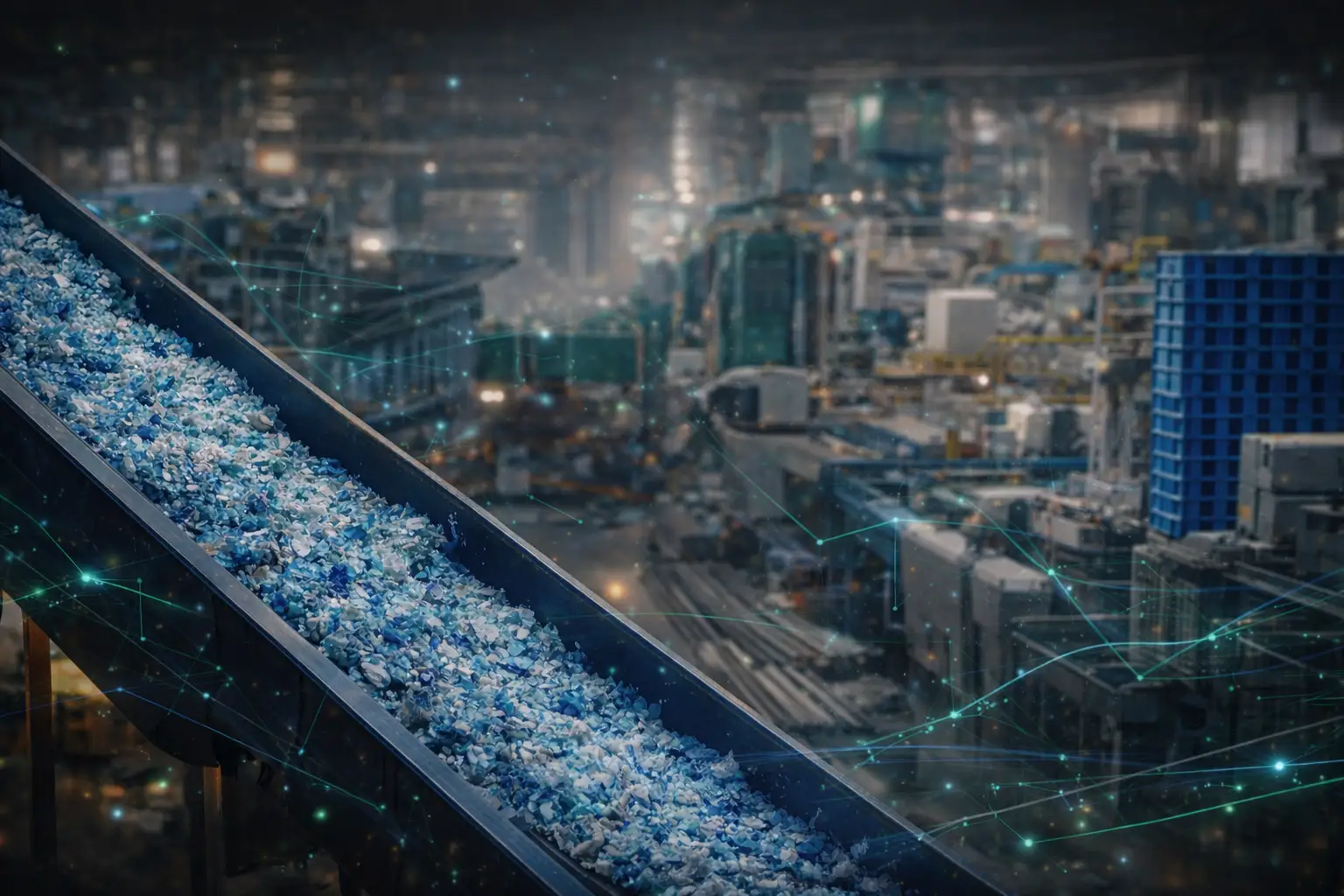

The market for PET Sheet Scrap in USA is becoming increasingly relevant for recyclers, manufacturers, processors, converters, and material traders seeking dependable secondary raw materials. PET, or polyethylene terephthalate, is widely used because of its strength, clarity, dimensional stability, and processing versatility. Manufacturing activities can generate sheet off-cuts, edge trim, rejected sheets, roll ends, and other surplus material that may retain significant commercial value.
For businesses operating across the USA, effective scrap management can turn production waste into a useful resource. Instead of treating every leftover sheet as disposal material, companies can identify recyclable PET streams and connect them with appropriate buyers. WasteMarkt provides a marketplace-oriented environment where recyclable materials can be presented with useful specifications for potential commercial connections.
What makes PET sheet scrap attractive to a buyer? The answer usually depends on material purity, quantity, consistency, physical form, location, and intended application.
Understanding PET Sheet Scrap in the USA
What Is PET Sheet Scrap?
PET sheet scrap refers to surplus or discarded polyethylene terephthalate sheet generated during manufacturing, converting, thermoforming, fabrication, packaging production, and related industrial processes. The material may appear as loose sheets, cut pieces, edge trim, rolls, regrind, or compacted loads.
The origin of the scrap matters. Post-industrial PET generated directly from a production line can be relatively clean and consistent. Material recovered after use may have different contamination and sorting requirements.
A supplier in the USA can make a listing more useful by identifying the source, color, thickness, quantity, packaging format, and overall condition of the material.
Why Material Identification Matters
PET should be separated from incompatible polymers whenever practical. Different plastics have different processing characteristics. Mixing materials can complicate recycling and may affect the quality of the recovered output.
For buyers, a clearly identified PET stream provides a stronger starting point for evaluation. For suppliers, accurate identification can reduce unnecessary questions and help attract businesses looking for a specific grade.
PET Sheet Scrap Buyers in the USA
Who Buys PET Sheet Scrap?
Potential buyers can include plastic recyclers, reclaimers, processors, compounders, manufacturers, converters, and material traders. Their requirements can vary considerably.
One buyer may want clean transparent PET sheet trim. Another may accept colored or mixed material if its processing system can handle it. A third may focus on recurring industrial scrap rather than occasional surplus lots.
WasteMarkt can help businesses present these opportunities in a marketplace setting where buyers and suppliers can explore relevant recyclable material streams.
What Buyers Usually Check
A professional buyer may evaluate several factors before agreeing to a transaction. These can include resin type, thickness, color, contamination, physical form, available quantity, location, packaging, and recurring supply potential.
Photographs can also help. A picture showing the actual material often communicates more than a generic product description.
PET Sheet Scrap Suppliers in the USA
Sources of PET Sheet Scrap
PET sheet scrap can originate from packaging plants, thermoforming facilities, extrusion operations, fabrication companies, printing operations, and other industrial businesses.
For example, a thermoforming facility may produce regular edge trim as part of its normal manufacturing process. If that trim is separated from other waste and stored correctly, it may become a consistent recyclable stream.
Similarly, a sheet converter may generate cut-offs during fabrication. Rather than mixing those pieces with general waste, the company can collect them according to resin and color.
How Suppliers Can Improve Listings
A useful supplier listing should avoid vague statements such as “high-quality plastic scrap.” A stronger description identifies the exact material.
Important details may include:
- PET resin identification
- Sheet thickness
- Color and transparency
- Scrap form
- Approximate available quantity
- Packaging type
- Warehouse or collection location
- Contamination level
- Photographs
- One-time or recurring availability
Why make a buyer request basic information when it can be provided from the beginning?
Quality Factors That Affect PET Scrap
Cleanliness
Clean material is generally easier to process than scrap containing dirt, adhesives, metal, paper, or incompatible plastics. Contamination can increase sorting and processing requirements.
Color
Clear, transparent, colored, and opaque PET streams can have different commercial applications. Buyers should therefore confirm color specifications before purchasing.
Thickness
Sheet thickness can affect handling and processing. Consistent thickness may be particularly important for buyers operating specialized recycling or manufacturing equipment.
Physical Form
Loose sheets, rolls, baled material, flakes, and regrind require different logistics. Packaging affects storage and transportation costs as well.

PET Recycling and Circular Manufacturing
Recycling allows suitable discarded material to re-enter manufacturing instead of being treated solely as waste. The U.S. Environmental Protection Agency describes recycling as a system in which materials are collected, processed, and manufactured into new products.
PET sheet scrap illustrates how industrial production can support circular material flows. A manufacturer may generate clean scrap, a recycler can process it, and another manufacturer may use the resulting recycled feedstock where technical requirements permit.
The exact recycling route depends on material quality and intended use. Not every PET stream follows the same process.
How PET Sheet Scrap Is Prepared
Collection and Sorting
The first step is usually collecting the material separately from incompatible waste. Sorting can then confirm resin type, color, and physical condition.
Size Reduction
Depending on the recycling process, sheets may be shredded or ground into smaller pieces. This can make the material easier to transport and process.
Cleaning and Further Processing
Some streams require washing or additional cleaning. Others, especially clean production scrap, may require less intensive preparation.
Further processing can include drying, filtration, extrusion, or pelletizing depending on the intended recycled product.
Real-World Examples
Consider a U.S. packaging manufacturer producing clear PET sheets. Its production process creates several hundred kilograms of edge trim each week. If the company separates that trim by resin and keeps it clean, the material becomes easier for a recycler to evaluate.
Another example involves a fabrication business that cuts PET sheets into custom components. The remaining pieces may be collected and sold as an industrial scrap stream rather than being discarded with mixed waste.
A third example is a supplier that produces PET sheet scrap regularly. Instead of advertising one large one-time lot, the supplier can provide estimated monthly availability. That information may be more useful to buyers with continuous production requirements.
Trading PET Sheet Scrap Through WasteMarkt
A specialized marketplace can make recyclable material discovery more structured. WasteMarkt can serve as a digital point where businesses can explore available secondary materials and present relevant information.
For suppliers, clear descriptions can improve the quality of inquiries. For buyers, detailed listings can make initial screening easier.
The marketplace approach is particularly useful when a business is searching beyond its immediate local network. A supplier in one part of the USA may have material that matches a buyer’s requirements in another region.
Logistics and Pricing Considerations
PET sheet scrap can be bulky relative to its weight. Freight therefore plays an important role in commercial decisions. Distance, loading arrangements, packaging, truck capacity, and shipment size can influence the final economics.
Pricing should also be viewed as market-dependent rather than fixed. Resin markets, demand, quality, contamination, freight, and available supply can all influence negotiations.
Buyers should evaluate the delivered cost rather than focusing only on the quoted material price.
Building Reliable Supplier Relationships
One shipment can establish a transaction, but consistent specifications can establish a business relationship. Suppliers that maintain predictable quality and communicate changes clearly may become more useful to recurring buyers.
Buyers can support this process by providing clear specifications and explaining their acceptance criteria.
Samples and trial shipments may also be appropriate where material performance is critical.
Frequently Asked Questions
1. What is PET sheet scrap?
PET sheet scrap is surplus or discarded polyethylene terephthalate sheet generated during production, fabrication, converting, or related industrial processes.
2. Who buys PET sheet scrap in the USA?
Potential buyers include recyclers, reclaimers, processors, manufacturers, converters, compounders, and material traders.
3. Is PET sheet scrap recyclable?
Suitable PET sheet scrap can be recycled when its composition and condition meet the requirements of the recycling process.
4. What types of PET sheet scrap are available?
Common forms include sheet cuttings, edge trim, rejected sheets, roll ends, flakes, and regrind.
5. Does clear PET scrap have separate demand?
Clear material can be attractive for applications requiring controlled color, although demand depends on buyer specifications and market conditions.
6. Does contamination affect PET scrap?
Yes. Dirt, adhesives, metals, paper, moisture, and other polymers can increase processing requirements.
7. What should a PET supplier disclose?
The supplier should provide resin type, color, thickness, quantity, physical form, location, packaging, contamination information, and photographs where available.
8. Can PET sheet scrap be sold in bales?
Yes. Some forms of sheet scrap can be compacted or baled to improve storage and transportation efficiency.
9. What is PET regrind?
PET regrind is PET material that has been mechanically reduced into smaller particles through grinding or shredding.
10. Is post-industrial PET scrap different from post-consumer PET?
Yes. Post-industrial material comes from manufacturing processes, while post-consumer material comes from products after consumer use.
11. Why does PET thickness matter?
Thickness can influence handling, processing, and the suitability of the material for particular recycling applications.
12. Can colored PET sheet scrap be recycled?
It can be recycled when the material composition and recycler’s process are suitable for that stream.
13. Should buyers request photographs?
Photographs can help buyers evaluate physical condition, color, packaging, and approximate material form before discussing a transaction.
14. Can PET sheet scrap be supplied regularly?
Yes. Manufacturing operations can generate recurring PET scrap streams that may be available monthly or according to production schedules.
15. Does location affect PET scrap transactions?
Yes. Transportation distance and loading requirements can significantly affect the overall cost of a shipment.
16. Why is source segregation useful?
Segregating PET at the source can reduce contamination and make the material easier to identify and process.
17. Can PET sheet scrap be used to make new products?
Recycled PET can be used in suitable manufacturing applications when the recovered material meets the technical requirements of the intended product.
18. What is a PET scrap trial shipment?
It is a smaller transaction used to evaluate material consistency and processing suitability before establishing a larger supply arrangement.
19. How can suppliers attract serious buyers?
Detailed specifications, realistic quantities, clear photographs, accurate location information, and transparent communication can make a listing more useful.
20. How can buyers find PET sheet suppliers?
Businesses can use specialized recyclable-material marketplaces such as WasteMarkt to explore relevant suppliers and available material streams.
Conclusion
The future of PET Sheet Scrap in USA trading is likely to depend increasingly on transparency and efficient material matching. Businesses that treat scrap as a defined secondary resource can create clearer opportunities for recyclers and manufacturers.
For WasteMarkt, the wider opportunity lies in helping recyclable materials become easier to discover, compare, and trade. As manufacturers across the USA look for practical circular-material solutions, well-documented PET sheet scrap can become more than production residue. It can become part of a connected supply chain built around resource recovery. Businesses looking to explore PET Sheet Scrap in USA opportunities can visit WasteMarkt to discover recyclable material listings and potential buyer or supplier connections.


