
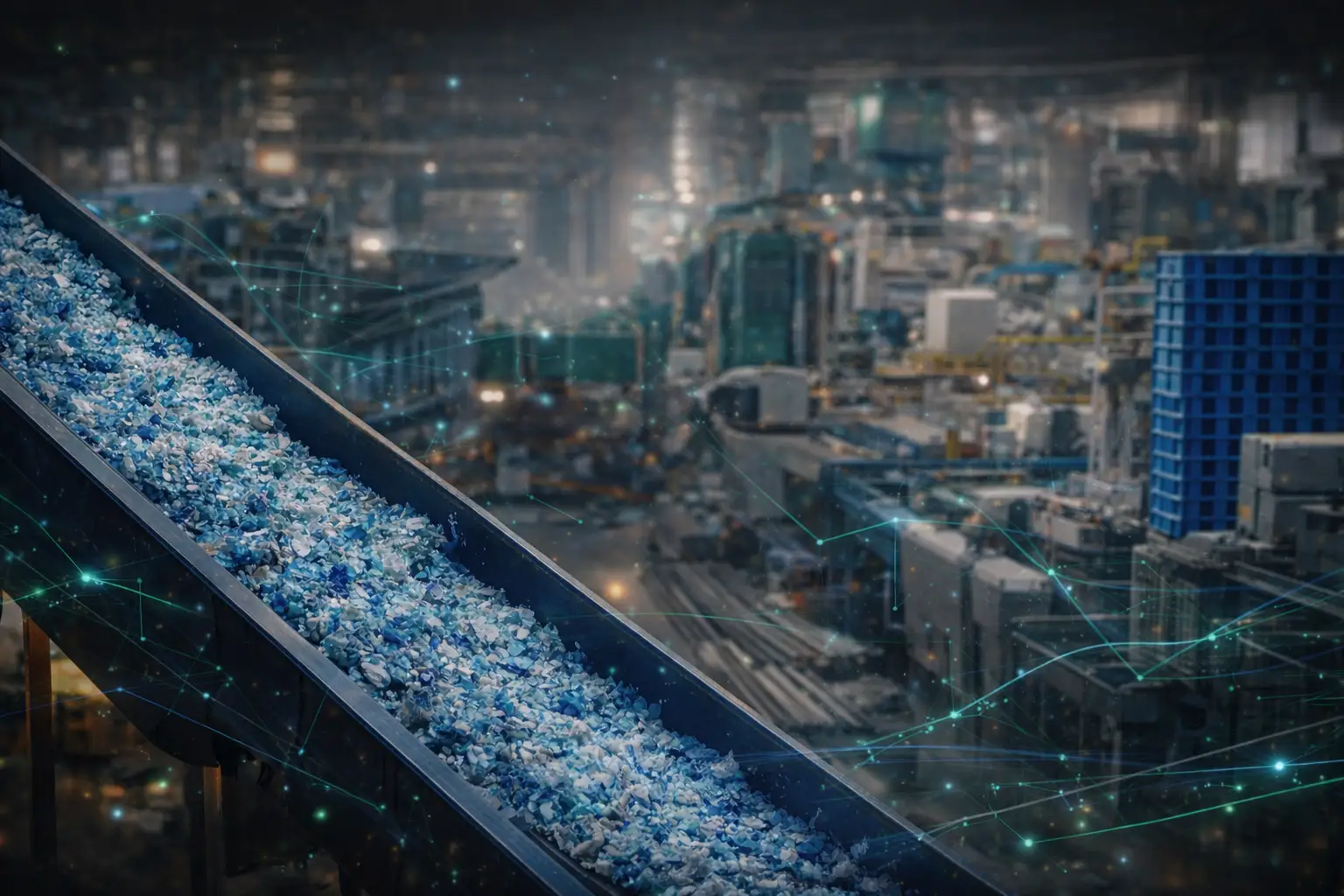
Plastic Recycling in California Scrap Buyers Recyclers Manufacturers Prices and Industrial Pickup
California is a large and highly regulated market for plastic scrap, recycled resin, packaging and industrial recovery services. Its manufacturing centers, ports, consumer economy, farms, food processors, technology companies, aerospace suppliers and distribution networks generate distinct material streams. A clear stretch film bale from an Inland Empire warehouse requires a different buyer and collection model from an aerospace nylon runner, Central Valley agricultural film or PET beverage container recovered through the California Refund Value system.
This guide is written for companies that generate, buy, process or use plastic in California. It covers polypropylene, HDPE, LDPE and LLDPE film, PET, PVC, ABS, polystyrene, nylon, polycarbonate, acrylic and engineering compounds in the commercial forms that recyclers trade: parts, runners, purges, lumps, pipe, sheet, rolls, bales, regrind, flakes, agglomerate and pellets. It also explains pickup, net pricing, facility review, source segregation, ports and current California programs that affect packaging and recycling decisions.
WASTEMARKT can help a California generator publish a material offer, a recycler describe capacity and a manufacturer post a recycled feedstock requirement. Each party must still verify the material, legal counterparty, receiving facility, environmental status, transport, payment, technical suitability and contract. California rules and local requirements change, so regulated businesses should confirm current obligations directly with CalRecycle, local enforcement agencies and qualified advisors.
What Plastic Recycling in California Means for Business
Industrial recycling begins where the scrap is created. A factory must identify the polymer and prevent incompatible parts, labels, metal, cardboard, food, oil and floor waste from entering the stream. A recycler must confirm that the material fits its equipment, authorizations and downstream market. A manufacturer buying recycled feedstock needs a written specification, representative sample and production trial.
The highest net value usually comes from material that is consistent, dry, concentrated and safe to handle. A commodity resin can support a strong program when a plant generates dense recurring truckloads. A specialty engineering plastic may lose most of its value when several grades are mixed, customer traceability is missing or small quantities must travel across the state.
Commercial service also differs from public recycling. Factories and warehouses may need gaylords, roll offs, compactors, balers, drop trailers or scheduled full truckloads. The service must include accepted material, container ownership, weights, pickup timing, contamination, rejected loads, records and a lawful destination.
Why California Is a Distinct Plastics Market
California combines the largest consumer centers on the West Coast with major ports, extensive food and agricultural production, electronics and technology manufacturing, aerospace, medical devices, construction and large fulfillment networks. These sectors create post industrial scrap, commercial film, beverage containers, durable goods, packaging and recycled resin demand. They also operate under state and local waste, packaging, air, water, fire and land use requirements.
Southern California contains dense manufacturing and logistics corridors but also congestion, high land costs and local hauling systems. The Bay Area and Silicon Valley produce specialized electronics and engineering plastics with strict traceability needs. The Central Valley adds agricultural film, irrigation products, food packaging and long transport lanes. Northern and coastal regions can require aggregation before material reaches an economic outlet.
A statewide buyer list is therefore insufficient. The transaction must match polymer, form, source, quality, quantity, location, regulatory status and the processor’s confirmed capability. A recycler that accepts one category of rigid packaging may reject the same resin in dirty film, multilayer sheet or a container with uncertain former contents.
| California region | Major hubs | Typical commercial sources | Planning priority |
| Los Angeles Basin | Los Angeles Commerce Vernon Carson Torrance | Packaging molding film food distribution aerospace and port cargo | Local hauling traffic facility fit and contamination |
| Inland Empire | Ontario Fontana Riverside San Bernardino | Warehouses fulfillment centers pallets film returns and manufacturing | Route density bale quality dock timing and payload |
| Orange and San Diego | Anaheim Irvine Santa Ana San Diego Carlsbad | Medical devices electronics molding packaging and life sciences | Traceability clean streams customer controls and freight |
| Bay Area | San Francisco Oakland San Jose Fremont | Technology electronics food distribution packaging and durable goods | Engineering resin identity ports labor and space |
| Sacramento and Central Valley | Sacramento Stockton Modesto Fresno Bakersfield | Agriculture food processing irrigation film crates pipe and distribution | Dirt moisture seasonality distance and aggregation |
| Central Coast and North State | Salinas Santa Maria Santa Rosa Chico Redding | Produce packaging greenhouse film wineries manufacturing and retail | Seasonal volume backhaul storage and regional outlets |
Los Angeles County and the Industrial Basin
Los Angeles County contains converters, injection molders, blow molders, food and consumer product companies, garment and textile operations, aerospace suppliers, recyclers and extensive warehousing. Commercial streams can include PP runners, HDPE bottles and drums, LDPE film, PET packaging, ABS housings, acrylic sheet, nylon, purge and mixed rigid products. Each stream needs a buyer that accepts its actual source and form.
Cities in the basin may use franchise or exclusive commercial hauling systems. A generator should confirm whether a proposed collector can legally service the address, what local permits or agreements apply and whether source separated recyclable material receives different treatment. A price from a distant buyer is not useful if the pickup arrangement conflicts with local requirements.
Congestion and dock constraints affect cost. State loading hours, appointment rules, trailer access, pallet count, normal weight and labor responsibility in the request. A short geographic distance can still produce detention and low route productivity when sites are difficult to enter or loads are not ready.
The Inland Empire
Riverside and San Bernardino counties are central to Southern California distribution and fulfillment. Warehouses generate stretch wrap, shrink film, pallet covers, straps, damaged totes, pallets, retail returns and packaging components. Manufacturers add molding, extrusion and assembly scrap. Route density can support frequent collection when neighboring sites use compatible specifications.
Clear film should be separated from colored film, tape, labels, paper, strapping, food and floor debris. Bale density and moisture determine trailer payload and price. A recycler needs representative photographs of complete bales, average weight, dimensions, storage method and weekly production before offering pickup.
Returns and unsold goods require careful identification. Products may combine several plastics, electronics, metal or confidential branding. Confirm ownership, destruction requirements and downstream separation before releasing them as recycling. A certificate should describe the actual service performed rather than simply stating that everything was recycled.
Orange County
Orange County supports medical device, electronics, packaging, aerospace, consumer product and precision manufacturing. Potential streams include clean molding runners, engineering resin parts, trays, protective film, sheet, reels, acrylic, polycarbonate, ABS and nylon. These materials can have strong value when grade and customer restrictions are preserved.
Medical and controlled product scrap requires source specific review. A recycler must know whether material contacted biological, pharmaceutical or chemical substances, whether labels or devices are removed and whether destruction is required. Clean production trim from a controlled process should be documented separately from used products or regulated waste.
Engineering resin should remain in original labeled containers or dedicated gaylords. Separate flame retardant, glass filled, mineral filled, impact modified and unfilled grades. Visual similarity does not establish compatibility, and an unverified blend may be unusable for the intended application.
San Diego County
San Diego combines biotechnology, medical devices, defense, aerospace, electronics, food and beverage operations, tourism and cross border manufacturing. Plastic streams may include laboratory packaging, cleanroom production scrap, engineering components, films, bottles, crates and distribution materials. Safety and regulatory history matter as much as polymer identity.
A generator should distinguish unused manufacturing offcuts from used laboratory containers, medical products or material with uncertain exposure. Do not grind or consolidate items merely to reduce volume before classification and acceptance are resolved. The receiving facility should approve the source, condition and required documentation in writing.
Cross border routes through the San Diego and Tijuana economy require clear exporter, importer, owner, carrier and destination roles. Product, recyclable material and waste descriptions must match the facts and current requirements. Compare cross border economics with qualified domestic outlets after including inspections, customs, delays, payment and rejected shipment risk.
The Bay Area and East Bay
The Bay Area contains technology, food and beverage, logistics, consumer goods, construction and advanced manufacturing. Oakland and East Bay industrial zones can provide access to warehouses, processors and port logistics, while high operating costs and limited space increase the importance of fast container turns and dense loads.
Common streams include distribution film, beverage and food packaging, molded parts, reusable transport packaging, electronics plastics and construction materials. A generator should not combine commercial film with food contaminated packaging or demolition plastic. Local collection rules and facility authorizations should be verified by site.
Port access can support selected domestic and international routes, but export demand should never substitute for a confirmed lawful destination. Container preparation, seals, verified weights, drayage, terminal charges, documentation and the cost of a refused load belong in the netback calculation.
Silicon Valley and Advanced Manufacturing
San Jose, Fremont, Santa Clara and nearby cities produce electronics, semiconductor equipment, precision components, data hardware and specialized packaging. Materials can include ABS, PC ABS, polycarbonate, PMMA, nylon, acetal, PBT, PPS, fluoropolymers and filled compounds. Original grade, additives and process history are essential.
Circuit boards, batteries, wires, metal inserts, coatings and flame retardants change both value and regulatory route. Plastic housings recovered from electronics should not be treated as clean production scrap without dismantling and material verification. Customer confidentiality may require controlled destruction and documented chain of custody.
A specialty recycler or compounder may accept small but consistent streams that a commodity recycler cannot use. Provide original resin documents, part drawings where permitted, photographs, typical and maximum contamination and a representative sample. The buyer should test for the properties that matter to the next application.
Sacramento and Northern Central California
Sacramento and surrounding counties connect government, construction, food distribution, manufacturing and regional logistics. Streams may include packaging film, pipe, crates, pallets, molded parts, beverage
containers and construction products. The region can also serve as a consolidation point for material generated farther north.
Generators should distinguish municipal or public contract material from privately owned commercial scrap. Authority to sell, reporting requirements and destination rules must be clear. A broker should not offer publicly controlled bales or material under an exclusive contract without written authorization.
Regional collection works best when sites use consistent labels, contamination limits and packaging. A shared route should preserve source identification so one contaminated load does not create claims against every participating generator.
The Central Valley
Stockton, Modesto, Fresno, Bakersfield and neighboring agricultural counties generate food and beverage packaging, irrigation pipe, greenhouse and mulch films, produce crates, pallets, drums, bins and processing scrap. Volumes can be seasonal and spread across long distances. Dirt, moisture, organic residue and agricultural chemicals affect recovery.
Agricultural film offers should identify the film type, crop or use, soil and moisture, netting, twine, clips, multilayer construction, collection method and storage. A clean sample cut from the top of a pile does not represent a field recovered load. Buyers need representative contamination and expected processing yield.
Onsite baling or densification can improve freight, but equipment should be installed only after an outlet approves the prepared form. Include labor, power, maintenance, safety, fire protection, seasonal storage and residue management in the investment case.
The Central Coast and Produce Regions
Salinas, Santa Maria and other Central Coast produce regions use films, rigid containers, crates, pallets, irrigation products and food packaging. Clean reusable transport packaging may have a reuse route before recycling. Damaged units should be identified by polymer, color, labels, metal and ownership.
Field and packing house streams should remain separate. Packaging removed in a controlled facility is usually easier to clean and document than material collected from soil. Food contact history does not automatically make recycled output suitable for food packaging; the next application requires its own process and regulatory review.
Seasonal peaks need storage and pickup plans agreed before harvest. Protect material from rain, wind and ultraviolet exposure, maintain fire safe access and rotate inventory. A buyer should know when projected volume becomes physically available.
The North Coast and North State
Northern California generators may be farther from specialized processors. Common opportunities include winery and beverage packaging, agricultural materials, commercial film, construction products, retail distribution and small manufacturing streams. Aggregation and backhaul often decide whether pickup is economical. A regional collector can combine compatible material from several sites, but the specification must remain clear. Do not mix resin families merely to fill a trailer. Use labels and load records that identify each source, weight and inspection result.
Wildfire, smoke, road closures and storms can interrupt service or change material condition. Covered storage, emergency contacts and backup outlets should be included in recurring programs. Reinspect material after an event before shipping it under an earlier approval.
Industrial Generators and Source Segregation
Value is protected at the machine, warehouse station or packing line. Place dedicated containers beside each source, label accepted and prohibited items and assign an owner for routine inspections. Record resin, grade, color, process, customer and date when those fields affect the outlet.
Keep floor sweepings, maintenance waste and unknown parts separate from clean production scrap. Close containers between additions and protect them from rain, dust and unauthorized disposal. Photographs and physical examples in work instructions help operators make consistent decisions.
A material map should list every stream, normal weight, seasonal range, container, present destination, handling cost and quality risk. This gives recyclers credible data and helps management prioritize the streams that can produce the largest verified improvement.
Injection Molding Scrap
Injection molders generate runners, sprues, short shots, startup parts, color changes, rejected assemblies, purge and internal regrind. Same grade clean runners may support direct reuse or a recurring recycler program. Painted, plated, overmolded, filled or mixed grade parts need separate evaluation.
Disclose whether the material contains virgin resin, internal regrind or customer supplied feedstock. Identify mold release, labels, inserts, elastomer seals, flame retardants and the reason for rejection. Customer owned or branded products may require destruction controls before sale.
Purge and lumps should be sorted by polymer and kept free of metal, bolts, floor debris and severely burned material. State typical and maximum dimensions and weight. A buyer may require cutting because oversized pieces can damage grinders and create unsafe handling.
Blow Molding and Rigid Container Scrap
Blow molding plants generate flash, tails, startup bottles, rejected containers, parison waste and purge. HDPE and PET streams can be valuable when resin, color and barrier construction are controlled. Caps, labels, handles, printing and multilayer walls change the outlet.
Used drums, pails and intermediate bulk containers require documented former contents and condition. The polymer code does not answer whether a container can be reused, reconditioned or recycled. The receiving facility should state its emptying, cleaning and prohibited contents requirements.
Line side grinding can reduce bulk and preserve identity when changeovers, magnets, screen size, dust and storage are controlled. Regrind from several customer grades should not be sold as one grade without a defined blend and suitable test evidence.

Extrusion Film Pipe Profile and Sheet Scrap
Extruders produce edge trim, startup rolls, off gauge film, pipe cutoffs, profile, sheet, purge and filter waste. Source records can make these streams traceable, but coatings, tie layers, printing, adhesives, mineral filler and ultraviolet additives still need disclosure.
Pipe and profile must be prepared to dimensions accepted by the receiving shredder. Long lengths, coils and metal reinforced products can be hazardous to handle. State resin markings, diameter, wall, service history, attachments and whether material is crosslinked or multilayer.
Film edge trim may be loose, rolled, baled, densified or agglomerated. The buyer should approve both the input and prepared form. Densification improves bulk density but can conceal foreign material or add thermal history.
Warehouse and Ecommerce Packaging
California fulfillment and distribution centers generate clear stretch film, shrink film, pallet covers, air pillows, straps, damaged totes and mixed returns. Clean source separated film is different from film pulled from compacted trash. Collection should start at unpacking stations.
Measure bale dimensions, average weight, wire or strap, weekly generation and storage. Remove tape, labels, cardboard, strapping, food and moisture. One poorly controlled warehouse can contaminate a consolidated regional load, so multisite programs need site level audits.
Reusable pallets, totes and bins may retain more value through repair and return. Confirm ownership before destruction. When recycling damaged units, identify polymer, color, embedded tags, metal and labels, then match the stream to an approved processor.
Agricultural Film and Irrigation Products
California agriculture uses greenhouse covers, mulch film, silage or bunker films, irrigation tubing, pipe, drip tape, crates, bins and chemical containers. These products vary widely in polymer, thickness, additives, service life and contamination. One agricultural plastics label cannot support one price.
Separate film by use and construction. Record soil, plant material, water, sand, netting, twine and chemical exposure. Irrigation pipe and tubing should be identified for resin, fittings, emitters, metal, dimensions and whether it is conventional thermoplastic material.
Collection economics depend on seasonal volume, field preparation, density and distance. A recycler should perform a representative trial that measures incoming weight, contamination, wash or sorting loss and usable output before offering a long term price.
Beverage Containers and the California Refund Value System
California operates a Beverage Container Recycling Program that includes eligible plastic beverage containers and California Refund Value. Material handled through redemption centers and certified processors follows program rules that differ from ordinary factory scrap. Commercial parties should verify current certification, reporting, weighing and payment requirements directly with CalRecycle.
PET and HDPE beverage streams should be described by source, color, closures, labels, moisture and bale quality. A deposit or redemption system can improve collection, but it does not guarantee that every bale meets a reclaimer’s specification. Sampling and contamination controls still apply.
A recycler or broker should not represent itself as certified for beverage program transactions without current evidence. Verify the legal entity, location, certification or processor status, permitted activity and role in the chain before relying on program payments or records.
Post Consumer and Municipal Material
Post consumer plastic may come from curbside collection, beverage redemption, retail takeback, commercial establishments, agricultural recovery or durable products. It normally requires more sorting and preparation than controlled post industrial scrap. A material recovery facility bale is a specification, not a simple resin name.
Municipal contracts and franchise systems determine ownership and service rights in many communities. Confirm who may sell the material, which processor is approved and what reporting follows the load. Publicly controlled material should not be offered through an unauthorized private listing.
Manufacturers buying PCR should qualify the exact recycler, source category, process and product. Certificates and claims must match the producing site and product code. California collection origin alone does not establish food contact suitability, recycled content percentage or performance.
| Material stream | Common California source | Potential buyer | Critical offer details |
| PP and TPO | Molders automotive products crates caps and packaging | Grinder compounder or injection molder | Grade filler elastomer color coatings and metal |
| HDPE | Bottles drums pipe bins pallets and blow molding plants | Reclaimer pipe recycler or compounder | Source color former contents pipe type and dimensions |
| LDPE and LLDPE | Warehouses converters farms food packaging and construction | Film recycler pelletizer or film producer | Film type print labels moisture dirt and bale density |
| PET | Beverage program packaging sheet preforms fiber and strapping | Certified processor wash plant sheet fiber or resin producer | Program status color PVC labels moisture fines and source |
| PVC | Pipe profile siding flooring medical products and construction | Specialized PVC recycler or compounder | Rigid or flexible additives exposure contamination and project timing |
| Material stream | Common California source | Potential buyer | Critical offer details |
| ABS and HIPS | Electronics appliances aerospace automotive and sheet | Engineering recycler compounder or molder | Grade flame retardant coatings rubber and metal |
| Engineering resins | Technology medical aerospace and precision manufacturing | Specialty compounder or qualified manufacturer | Exact grade moisture reinforcement approvals and traceability |
Polypropylene Recycling in California
California PP streams include injection molding runners, crates, caps, pails, automotive and consumer parts, woven products, sheet, thermoformed packaging, purge and off specification resin. Homopolymer, random copolymer, impact copolymer, TPO, filled and reinforced products should be offered separately unless the buyer approves a controlled blend.
Important fields include original grade, melt flow test condition, ash or filler, impact modifier, color, odor, coatings and metal. A number 5 resin identification code indicates a polymer family. It does not prove grade, cleanliness, recyclability under California labeling law or acceptance by a particular buyer.
Separate natural from colored material and unfilled from talc or glass filled compounds. A recycler should explain grinding, metal removal, blending and tests. A manufacturer should trial the material at the intended blend ratio and link incoming lots to finished product performance.
HDPE Recycling in California
HDPE appears in milk and detergent bottles, drums, pails, irrigation pipe, tanks, bins, pallets, crates, dunnage and blow molded products. Natural bottle scrap, mixed color rigid material and black pipe serve different markets. The buyer needs source and grade information in addition to polymer identity.
For containers, disclose color, labels, closures, barrier layers and former contents. For pipe, state application, markings, diameter, wall, length, service history and attachments. Crosslinked, reinforced and multilayer products should not be offered as ordinary HDPE without supporting evidence.
Large tanks and long pipe may require onsite cutting to obtain safe handling and a useful payload. Agree on dimensions, tools, loading and contamination before mobilizing. Preparation does not remove the need to classify the material and confirm a lawful destination.
LDPE and LLDPE Film Recycling in California
Film sources include warehouse stretch wrap, shrink film, bag and liner trim, agricultural film, greenhouse covers, construction film and flexible packaging. Clean clear commercial film usually has more outlets than wet, dirty, printed or multilayer material. Flexible appearance alone does not identify the formulation.
A complete offer states source, construction, print percentage, color, labels, adhesives, paper, moisture, dirt, odor, bale density and monthly volume. Agricultural film needs representative recovery data. Post industrial edge trim should identify coatings, tie layers and inks.
Store bales under cover on a clean surface and rotate inventory. Weigh enough units to establish a reliable average. The first shipment should be sampled under an agreed method so future loads and claims can be compared with the approved condition.
PET Recycling in California
PET sources include CRV beverage bottles, thermoforms, sheet trim, preforms, strapping, fiber and production scrap. Bottle bales, thermoform bales, preform scrap and sheet regrind are not interchangeable. Color, PVC, labels, moisture, fines, multilayer packaging and non PET items affect wash yield.
Manufacturers should preserve grade and lot information when intrinsic viscosity or application matters. Reclaimers should define sorting, washing, drying, flake size, metal control and testing. Food packaging use requires process specific regulatory and customer review.
California’s beverage infrastructure can create large PET flows, but commercial pricing still depends on the exact program status, processor, quality, location and date. Do not blend CRV payment assumptions with an ordinary delivered bale price without explaining the transaction basis.
PVC Recycling in California
Rigid PVC is used in pipe, profile, siding, trim and construction products. Flexible PVC appears in hose, sheet, cable, flooring and medical products. Plasticizers, stabilizers, filler, reinforcement and exposure history create separate material families that require specialized outlets.
Factory pipe cutoffs can be consistent, while demolition or recovered medical products introduce different contamination and regulatory questions. Identify post industrial or post use origin, rigid or flexible construction, additives, attachments and any exposure before offering the material.
PVC can create serious quality problems in PET and polyolefin processes. Use dedicated labeled containers and a buyer that has approved the stream. Do not assume a construction recycling facility accepts PVC simply because it accepts mixed construction debris.
ABS Polystyrene and EPS Recycling in California
ABS and HIPS appear in electronics, appliances, automotive and aerospace components, toys, sheet and durable goods. EPS appears in protective packaging, insulation and food service items. Each form needs a specific outlet, and lightweight foam has difficult freight economics unless it is densified.
ABS and HIPS sellers should identify flame retardants, paint, plating, labels, rubber, glass and metal inserts. Separate clean production scrap from dismantled products. Engineering identification and screening methods should follow a written quality plan.
California SB 54 includes specific requirements for EPS food service ware. CalRecycle reported in 2026 that the statutory recycling rate condition had not been met and that covered producers were prohibited from selling or distributing this food service ware in or into California. Publishers must recheck the current program page before relying on this status.
Nylon Polycarbonate PMMA and Engineering Plastics
Technology, medical device, aerospace and precision manufacturers can generate nylon, polycarbonate, PC ABS, PMMA, acetal, PBT, PPS and other high value materials. Commercial value depends on exact grade, reinforcement, flame retardants, moisture history, color and customer restrictions.
Nylon is hygroscopic and may contain glass or mineral filler. Polycarbonate and acrylic parts can be coated, printed or bonded to other polymers. Preserve original labels and keep production lots segregated. A mixed engineering resin stream can be worth less than separated commodity plastic.
A specialty compounder may accept smaller documented volumes. Samples should capture routine variation and not consist only of unused pellets. The next manufacturer must approve technical properties, regulatory needs and customer specifications before use.
Regrind Pellets and California PCR
California manufacturers can buy recycled plastic as regrind, flake, agglomerate, pellet or compound. Every form requires source and lot control. Pelletizing can filter and homogenize material, but it does not erase degradation, odor, contamination or source history.
Certificates of analysis should identify product, lot, producing site, date, methods and the results required by the purchase specification. A technical data sheet gives typical information and cannot prove that an individual shipment conforms.
PCR and PIR claims require definitions and records that match the product and transaction. Where certification is required, review legal entity, facility, product code, method, valid dates and chain of custody. California rules for packaging and beverage containers may impose additional reporting or content responsibilities on covered businesses.
Types of California Recycling Partners
Collectors provide containers and routes; grinders size reduce material; reclaimers sort, wash or pelletize; compounders adjust properties; manufacturers consume feedstock; brokers arrange sales; and carriers move loads. One company may perform several roles, but the contract should identify who owns and receives the material.
Local collectors can serve small sites and several streams. Direct sale to a processor or manufacturer may suit clean recurring truckloads. A broker can reach distant markets if title, payment, destination and rejected load responsibilities remain transparent.
Confirm whether an address is a processing plant, transfer site, warehouse or office. Ask for accepted materials, equipment, capacity, minimum quantity, service area, containers, lead time and current downstream outlet. Company approval should be tied to the exact facility and activity.
Finding California Buyers Through WASTEMARKT
A useful WASTEMARKT listing states polymer, grade or source, form, color, production process, post industrial or post consumer origin, contamination, available quantity, recurring volume, location, packaging, loading equipment, photographs and sample availability. A specific listing filters out unsuitable buyers.
Buyers should publish wanted listings with accepted materials, measurable quality limits, form, volume, delivery geography and timing. A manufacturer seeking natural HDPE bottle regrind should not be matched only because another listing says mixed HDPE scrap.
Use the marketplace to create a shortlist, then verify the company, receiving site, environmental status, samples, carrier, price basis and contract. Confidential formulations, customer names and product designs should be shared only through appropriate controls.
Preparing a California Plastic Scrap Listing
Use a title such as clean clear LLDPE stretch film bales in Ontario rather than plastic waste for sale. Distinguish inventory available now from projected monthly output. State whether the requested price is loaded at site, delivered or based on another defined term.
Photographs should show close views, entire containers or bales, labels, packaging, storage and normal variation. Provide actual weights and say whether pallets, wire and packaging are included. Remove sensitive information without hiding material condition.
Disclose print, coatings, metal, odor, moisture, food, agricultural dirt and inconsistent size. These conditions do not always prevent recovery, but they control buyer fit and price. Accurate listings reduce rejected loads and unnecessary long distance freight.
Local Search and Market Development
Combine polymer, form and location in searches: LDPE film recycler Inland Empire, PP regrind buyer Los Angeles, PET processor California or ABS compounder Bay Area. Search results are leads. Verify the physical facility and capability before shipping.
CalRecycle provides directories, facility data and market development resources that can support discovery. Industry associations, equipment vendors, manufacturing networks and local recycling coordinators can identify additional processors. Every source should be dated and checked against the exact requirement.
Maintain a primary, secondary and contingency outlet for recurring streams. Record the person contacted, facility, role, approved material, inspection date and next action. Recheck after ownership, equipment, authorization or destination changes.
| Qualification question | Evidence to request | Warning signal |
| Who is the counterparty | California legal name address tax records and authorized contact | Invoice bank and website show unrelated identities |
| Where will material go | Receiving site equipment role contact | Destination changes after loading |
| Qualification question | Evidence to request | Warning signal |
| and written acceptance | without explanation | |
| Can the site perform the work | Process flow capacity applicable records and current references | No verifiable operating location or only stock images |
| What material is approved | Specification representative sample and contamination limits | Buyer claims to accept every plastic without review |
| Can the collector serve the site | Local hauling authority route equipment and service terms | Pickup arrangement ignores franchise or local rules |
| How will freight work | Carrier identity insurance appointment weights and backup plan | Unverified carrier or last minute pickup change |
| What happens on rejection | Inspection evidence cure return and cost allocation | Unlimited deductions or abandonment at seller expense |
Verifying California Recyclers Buyers and Brokers
Compare the contracting name, California business record, physical address, website, email domain, invoice and bank beneficiary. A registered entity or active account does not prove facility capability, environmental authorization, credit or material acceptance.
Confirm the receiving site directly. Ask for equipment, operating hours, accepted form, unloading, current contacts and downstream products. When a broker is involved, identify who owns the load and obtain processor acceptance for high risk or unusual material.
Review insurance, references, complaint process and environmental records in proportion to the transaction. Use CalRecycle SWIS data when relevant to solid waste facilities and operations, while recognizing that a database entry must be matched to the proposed activity and current status.
Samples Specifications and Production Trials
A representative sample combines increments from different containers, bales, dates or production points under a written method. Seal and label the composite and retain a matched portion. A hand selected clean part cannot represent a variable commercial load.
The specification should define polymer, source, form, particle size, contamination, moisture, color, odor and performance properties. State test methods and conditions. Define which limits apply to each lot and which figures are only typical.
A production trial should reveal feeding, drying, conveying, filtration, odor, color, deposits, mechanical properties and scrap rate under intended conditions. Record blend ratio and settings. Source, line, formulation and process changes require notification and possibly requalification.
How California Plastic Scrap Prices Are Built
California has no single plastic recycling price. Value depends on polymer, grade, form, source, color, cleanliness, contamination, moisture, density, volume, preparation, location, freight, downstream demand and date. Local hauling restrictions and facility costs can also affect the net result.
One buyer may quote a gross material price and deduct freight, sorting, disposal, testing or brokerage. Another may quote delivered value. Convert every offer to the same net weight, unit, specification, location and delivery basis. Include avoided disposal cost only when the new program actually removes it.
A small site may pay for service even when the resin has commodity value because collection exceeds recovered value. Clean full truckloads can earn more. Segregation, baling, dense routes and short loading times often create more durable improvement than a temporary market price movement.
Calculating Seller Netback and Buyer Usable Cost
Seller netback equals revenue minus labor, sorting, baling or grinding, packaging, freight, brokerage, tests, claims and residual disposal, plus verified avoided cost. Buyer usable cost includes delivered price, inspection, drying, blending, yield loss, downtime and rejects. The lowest invoice price may not be the lowest process cost.
Use actual scale weights and define treatment of pallets, gaylords, bale wire, moisture and residue. Recurring formulas should identify the index or reference, grade, adjustment schedule and notice. A price index cannot replace the specification and delivery basis.
Model expected, lower yield and rejected load cases. California transport and storage costs can make the downside material. Decide in advance whether a rejected load is sorted, discounted, returned or lawfully managed elsewhere and who pays each cost.
| Netback factor | Seller question | Buyer question |
| Material price | Which grade form location quality and date does the price cover | Does the price apply to the approved specification and lot |
| Preparation | What sorting baling grinding or washing is required | Does preparation improve consistency or conceal contaminants |
| Local service | Can the collector legally serve the address under local rules | Does the receiving plan use an authorized and reliable route |
| Freight | Who books pays loads and carries delay risk | What is delivered cost at expected and low payload |
| Yield | Which deductions follow contamination moisture or residue | What usable output and scrap rate does the trial support |
| Payment and claims | When do title payment inspection and deductions occur | Which evidence proves nonconformance and remedy |
Industrial Pickup Models
Pickup options include gaylord and pallet collection, scheduled roll offs, compactors, balers, drop trailers, live loads, dry vans and flatbeds. The correct model depends on form, density, storage, dock, equipment, fire plan, local service rules and processor. Containers should protect quality and fit receiving equipment.
The service agreement should identify allowed material, container ownership, minimum weight, schedule, notice, loading, access, contamination, overweight, detention, missed pickups and emergency contacts. Equipment placed by the recycler needs defined maintenance, guarding, training, energy, insurance and removal responsibilities.
Measure pounds recovered, contamination, pickup reliability, trailer use, net value, safety and corrective actions. Replace estimates with actual load data. A program based on overstated weight can fail even when the material is technically recyclable.
California Franchise Hauling and Local Rules
California cities and counties may establish exclusive or nonexclusive franchise arrangements for commercial solid waste and recycling. Requirements differ by jurisdiction and material. Before changing collectors, confirm local definitions, service rights, self haul rules, source separated recyclable provisions and documentation with the responsible jurisdiction.
A recycler located nearby may not have authority to collect at every address. The generator should ask the local recycling coordinator or public works department focused questions and keep the response with the service file. A marketplace listing cannot override municipal contracting rules.
Multisite companies should not assume one statewide hauling contract works identically everywhere. Map each facility to its jurisdiction, current service agreement, approved containers and allowed alternatives, then select regional outlets within those constraints.
Truck Rail and Port Logistics
Most industrial plastic scrap moves by truck. Dry vans protect bales, gaylords and bagged resin; flatbeds may suit cut pipe or large rigid items; roll offs support local collection. Confirm securement, weather protection, maximum weight, loading equipment, appointment and detention.
Rail can suit selected high volume lanes when both parties have access or transload capability. California ports support international container routes, but port access does not prove that a recycled material shipment is lawful or accepted. Drayage, seals, verified weight, terminal charges and return risk must be included.
Use FMCSA SAFER to support motor carrier identity review and verify insurance independently. Know whether the counterparty is a carrier, broker or forwarder. Unexpected changes in driver, company, destination or bank details require confirmation before release.
Ports of Los Angeles Long Beach and Oakland
The Ports of Los Angeles and Long Beach form a major Southern California container gateway, while Oakland connects the Bay Area and Central Valley to international trade. These ports can support selected recycled resin, equipment and lawful commodity shipments. Port capacity is infrastructure rather than evidence of buyer demand.
Before export, identify exporter, importer, owner, destination facility, customs treatment, environmental requirements, inspection, payment and a lawful return route. Product, byproduct, scrap and waste descriptions must match the material. A purchase order does not replace regulatory review.
Compare export and domestic offers on delivered netback. Ocean freight, drayage, storage, demurrage, documentation, finance and dispute enforcement can exceed a higher destination price. Keep a backup outlet before loading the container.
Earthquake Wildfire Flood and Heat Resilience
California recycling programs should address earthquakes, wildfire, smoke, flooding, extreme heat, power interruption and road closures. Secure stored bales and equipment, maintain aisles, protect drains and define shutdown and evacuation responsibilities. Empty containers and loose film need wind control.
After an event, inspect moisture, ash, soil, odor, packaging and labels. Notify the buyer when material condition changes. A previously approved stream may require new samples or an alternate route after smoke or flood exposure.
Contracts should address notice, missed pickups, alternate carriers, storage and ownership during interruptions. Maintain primary and backup contacts for the generator, recycler, carrier and emergency team. Regional redundancy reduces dependence on one port, pass or processor.
Packaging Storage and Fire Prevention
Store plastic in stable labeled units with aisles, pile limits and separation suitable for the facility and local fire requirements. Protect bales, parts, regrind and pellets from weather, soil, oil and unauthorized additions. Repack damaged gaylords and unstable bales before movement.
Grinding and conveying can generate fines and combustible dust. Facilities need a qualified hazard assessment, ignition controls, housekeeping, ventilation or collection, equipment maintenance and emergency procedures that fit the actual polymer and process. Generic cleaning instructions are not a dust safety plan.
Pellet and flake spills create slip and environmental risks. Inspect bags, pallets, forklifts and bulk connections, recover spills quickly and prevent material from reaching drains. Training and protective equipment should match the task and material.
Contracts Weights Claims and Rejections
The agreement should define parties, material, specification, sampling, inspection, price, weights, packaging, freight, title, risk, payment, records, claims, confidentiality, term and termination. State which document controls if a purchase order conflicts with a master agreement.
Set an inspection period and evidence standard. Photographs, seal numbers, scale tickets, samples and test results should identify the load. Give the supplier access to retained material when practical and define sorting, discount, replacement, return or disposal remedies.
Certificates of recycling or destruction should describe the operation and facility that performed it. Shredding confirms size reduction, not final recycling. Branded or confidential products may require an agreed chain of custody and final disposition record.
Payment Controls and Fraud Prevention
Verify bank instructions through an independently known contact, especially after a change. Match the beneficiary with the contracting entity and investigate third party requests. Begin with a controlled trial order before increasing prepayment or credit exposure.
Define whether payment follows pickup, receipt, scale weight, inspection or final acceptance. Separate material value from container, transport, processing and residue charges. Link invoices, bills of lading, tickets, samples and claims by one load number.
Urgent payment, unexplained high prices, refusal to identify the receiving facility and last minute changes are warning signs. Stop shipment until inconsistencies are resolved. Suspected cyber fraud can be reported through the FBI Internet Crime Complaint Center and other appropriate channels.
CalRecycle Programs and Facility Oversight
CalRecycle administers programs for plastics, packaging, beverage containers, commercial recycling, market development and solid waste facilities. The correct program depends on the material and activity. A company should start with source, classification, handling method and destination rather than assuming one plastic recycling rule applies to every transaction.
California uses local enforcement agencies for many solid waste facility activities. CalRecycle’s Permit Toolbox describes excluded, notification, registration, standardized and full permit tiers. The tier depends on the type and amount of solid waste handled. Some operations may require other state or local permits even when a solid waste facility permit is not required.
Verify the legal operator, physical site, regulatory tier, status, authorized activity and actual material. The SWIS database contains facility, operator, status, waste type, inspection and enforcement information for covered solid waste sites. Database review should be combined with current agency and facility confirmation.
Mandatory Commercial Recycling
CalRecycle states that a California business generating four cubic yards or more of commercial solid waste per week must arrange recycling service under the mandatory commercial recycling program. Multifamily residential properties with five or more units are also covered. Businesses may use specified combinations of self haul, hauler pickup and recycling service.
Local communities may impose different thresholds or more specific requirements. A factory should confirm current obligations with its jurisdiction and distinguish general commercial recycling service from a specialized direct sale of production scrap. Documentation should show how each stream is managed.
Compliance does not guarantee that the selected route maximizes material value. Source separation, buyer qualification and netback analysis can turn a minimum service into a controlled industrial recovery program.
California SB 54 Packaging Responsibility
SB 54 created an extended producer responsibility program for packaging and single use plastic food service ware across sectors of the California economy. CalRecycle oversees implementation, covered material categories, needs assessment, producer guidance and the producer responsibility organization process.
Permanent regulations became effective in May 2026 according to CalRecycle’s program page. Covered businesses should determine their role, materials, exclusions, reporting, plan and fee responsibilities from current guidance. A supplier or recycler cannot decide producer status for another company based only on an invoice description.
SB 54 also changes market planning because packaging design, source reduction, recyclability and recycled material demand are connected. Manufacturers should preserve material and sales data, involve legal and packaging teams and recheck CalRecycle updates before publication or commercial commitments.
California SB 343 Recycling Labels
SB 343 established criteria for using chasing arrows and other recyclability indicators on products and packaging. CalRecycle publishes material characterization information used in the assessment. A resin identification code and a recyclable marketing claim serve different purposes.
CalRecycle’s September 2026 page states that labeling restrictions were scheduled for products manufactured after October 4 2026, while also reporting a July 2026 federal preliminary injunction blocking enforcement. Litigation may change the practical status. Companies must obtain current legal advice and review the live CalRecycle page before labels are printed or products are sold.
Technical recyclability, collection access and an allowed marketing claim are related but separate questions. Keep design, testing, collection, facility and claim evidence. Do not tell customers that a product is recyclable merely because the base polymer has an established recycling process somewhere.
California AB 793 and Beverage Plastic Content
AB 793 established definitions, reporting and compliance structures for plastic beverage container recycled content. CalRecycle’s permanent regulation materials address beverage manufacturers, reclaimers and manufacturers of post consumer recycled plastic, along with records and reporting.
A company should determine whether its products and role fall within the program, then maintain records that connect purchased recycled material to production and reporting. Supplier certificates should identify facility, product, lot and method. A generic sustainability declaration is not a complete compliance file.
Reclaimers and PCR manufacturers serving California beverage markets should review current reporting instructions and definitions. Buyers should avoid double counting material and confirm that the evidence supports the exact bottle, period and entity being reported.
Recycling Market Development Zones
CalRecycle’s Recycling Market Development Zone program connects recycling with economic development for California businesses that use materials from the state’s waste stream. The program describes permitting and technical assistance, loans and product marketing resources, subject to eligibility and local terms.
A recycler, compounder or manufacturer planning an expansion can check the RMDZ map and contact the relevant zone administrator. Assistance does not replace technical, financial or regulatory due diligence. Confirm eligibility, current funding, site control, feedstock, customers and all required permits before relying on support.
Generators can also benefit when new regional manufacturing demand shortens freight and strengthens outlets. Closed loop projects should document actual California feedstock, processing yield and finished product use.
Air Water Hazardous Materials and Local Permits
A recycling facility may need approvals beyond CalRecycle. Grinding, extrusion, washing, storage, wastewater, stormwater, fire risk, hazardous materials, buildings and land use can involve air districts, water boards, fire authorities, planning departments and other agencies. Requirements depend on equipment, emissions, discharge, material and location.
Chemical residues, contaminated containers and unknown industrial material need fact specific classification. Preserve safety data, product history, analyses and generator determinations. Do not use grinding or an invoice label to avoid hazardous waste or hazardous materials responsibilities.
Before leasing or buying equipment, prepare a process flow with input, storage, throughput, emissions, water, dust, noise, fire load, products and residuals. Review it with qualified professionals and responsible agencies. Facility authorization and material acceptance should be complete before regular inbound commitments.
Federal Interstate and International Requirements
California transactions can involve federal transport, workplace, environmental, customs, trade and product requirements. Interstate movement does not eliminate generator, carrier or destination responsibilities. Classification depends on the material and management, not the word recycling.
The U.S. EPA provides federal context for solid waste recycling and for transboundary shipments that fall within international agreements. Review requirements early because notice, consent, contract or destination controls may affect timing. Commercial delivery terms do not replace compliance duties.
Recycled plastic used in food packaging needs process and application specific review. FDA guidance discusses source controls, recycling processes and contaminant considerations. Clean appearance, California origin or a PCR certificate does not create universal food contact suitability.
Building a Recurring California Factory Program
Begin with a ninety day audit that identifies machines, departments, streams, weights, seasonality, present disposal and internal reuse. Prioritize clean recurring material that can be separated without disrupting production. Record baseline cost and quality.
Run a controlled pilot with written acceptance, trained operators, labeled containers, verified buyer and backup route. Review weight, contamination, pickup, netback and production impact for each load. Correct the process before expanding.
A mature program uses monthly scorecards, periodic buyer and facility reviews and an annual material map. Procurement, quality, production, environmental, safety, logistics and finance should share the records needed to keep the program reliable.
Programs for Small and Multisite Generators
Small generators can use authorized local collectors, shared routes, supplier takeback, regional consolidation or less frequent pickup after safe densification. Keep materials separate while aggregating so quality issues can be traced to the source.
Multisite companies should standardize stream names, containers, photos, training, weights and approved outlets. California’s local service systems mean one contract may require different execution by jurisdiction. Compare performance by facility and region.
Do not purchase a baler, compactor or grinder before measuring volume and confirming the outlet. Include space, utilities, labor, maintenance, safety, fire protection, permitting, insurance and residual costs. Equipment should solve a documented constraint.
Closed Loop Manufacturing in California
A closed loop program returns recovered plastic to the same or a related product system. It may connect a generator, collector, grinder, compounder, laboratory and converter. Each transfer needs material identity, weights, yield, specification and responsibility.
Start with actual product requirements. Simplify polymer and color where practical, remove incompatible components and trial recycled content at controlled levels. Track incoming scrap, processing loss, recycled output and finished product use without double counting.
Some streams are better suited to a different application. A technically sound open loop route can preserve value when return to the original product is unsafe or uneconomic. Claims should describe the verified route and evidence.
California Seller Checklist
Identify polymer, grade, source, form, color, additives, contamination and former contents. Measure inventory and recurring volume. Prepare representative photographs and samples, define packaging and loading and state the California pickup city and ZIP code.
Confirm ownership, classification, customer restrictions, local service rules and receiving facility. Compare netback, payment, claims and reliability. Verify buyer, processor and carrier before release and retain load records. Publish an accurate WASTEMARKT offer and update it when inventory, condition or schedule changes. A precise listing reaches buyers that can actually process the stream.
California Buyer Checklist
Publish a measurable requirement with polymer, source category, form, quality limits, trial quantity, recurring demand, delivery location and timing. Identify application, regulatory and customer requirements that are mandatory.
Qualify the exact generator stream through documents, representative samples and a commercial trial. Confirm transport, facility status, capacity, residual route, contract and backup supply. Monitor variation after approval.
Give suppliers prompt evidence based feedback. Clear specifications, consistent inspection, dependable pickups and fair claims help build a stable California recycled materials supply chain.
Frequently Asked Questions About Plastic Recycling in California
What is Article 32 about ?
Article 32 is the WASTEMARKT guide to plastic recycling in California, covering industrial scrap buyers, recyclers, manufacturers, prices, pickup, regional markets and current compliance topics.
How do I find plastic scrap buyers in California ?
Publish a precise WASTEMARKT offer, search by polymer form and region, verify the legal buyer and receiving facility and begin with representative samples and a trial load.
Which California regions have major recycling activity ?
Los Angeles County, the Inland Empire, Orange County, San Diego, the Bay Area, Sacramento and the Central Valley have distinct manufacturing, packaging, warehouse and agricultural streams.
Will a California recycler pick up factory plastic ?
Pickup depends on polymer, form, contamination, volume, density, distance, local service rules, equipment and outlet. Provide these details for an accurate quote.
What plastics can commercial recyclers accept ?
Outlets may accept PP, HDPE, LDPE, PET, PVC, ABS, polystyrene and engineering plastics, but acceptance depends on exact grade, source, form, condition and facility.
Who buys polypropylene scrap in California ?
Grinders, recyclers, compounders and manufacturers may buy PP. Identify homopolymer, copolymer, TPO, filler, color, form and contamination before contacting them.
Can Inland Empire warehouses recycle stretch film ?
Yes when a buyer is available and film is clean, dry and separated from straps, labels, paper and food. Baling and dense routes can improve service economics.
How can California farms recycle plastic film ?
Identify film use and construction, remove soil, moisture, twine and other contaminants as agreed and test a representative seasonal load with a qualified agricultural film processor.
How much is plastic scrap worth in California ?
There is no single price. Value depends on polymer, grade, form, source, color, quality, volume, location, freight, service rules, date and delivery basis.
How should I compare recycling quotes ?
Normalize each quote to the same net weight, specification, location and freight basis, then include preparation, tests, yield, claims, payment and avoided disposal cost.
Does California require commercial recycling ?
CalRecycle states that covered businesses generating four cubic yards or more of commercial solid waste per week must arrange recycling service. Local requirements may differ or be more specific.
Does a recycling facility need a permit ?
California uses several regulatory tiers based on activity and amount. Some activities are excluded or notified, while others require permits and additional state or local approvals.
How do I verify a California recycling facility ?
Confirm legal operator, physical address, equipment, approved material, regulatory tier, applicable CalRecycle or local records, insurance, references and downstream outlet.
What is California SB 54 ?
SB 54 establishes an extended producer responsibility program for covered packaging and single use plastic food service ware. Covered businesses should use current CalRecycle guidance.
What does California SB 343 change ?
SB 343 sets criteria for recyclability labels. CalRecycle also reports ongoing litigation and an enforcement injunction, so companies should check the current page and obtain legal advice.
What does AB 793 cover ?
AB 793 establishes recycled plastic content reporting and compliance requirements for covered beverage container businesses, reclaimers and PCR manufacturers.
Can plastic scrap be exported through California ports ?
Potentially, after confirming classification, destination, customs, environmental requirements, quality, payment, port costs and a lawful return or alternate route.
Should plastic be baled or ground before sale ?
Only when the buyer approves the prepared form and economics. Preparation can improve payload but adds equipment, safety, contamination and regulatory considerations.
How can a small California factory start recycling ?
Audit and weigh streams, separate the cleanest recurring material, confirm local service options, pilot one buyer route and expand after actual costs and quality are known.
How does WASTEMARKT support California recycling ?
Generators can list scrap, buyers can post requirements and service providers can present capabilities. Each party then verifies material, facility, compliance, logistics and terms.
Conclusion
California plastic recycling requires both material control and location specific execution. Los Angeles, the Inland Empire, San Diego, the Bay Area, Sacramento and the Central Valley have different sources, outlets, logistics and local rules. The correct buyer accepts the exact stream through a verified facility and produces a useful downstream material at a sustainable net result.
WASTEMARKT can connect California factories, recyclers, buyers, compounders and service providers around detailed listings. Source segregation, current regulatory review, representative sampling, verified facilities, transparent pricing, safe transport and written terms turn those connections into recurring business.
FIND CALIFORNIA BUYERS | LIST PLASTIC SCRAP | REQUEST PICKUP
Connect California generators with recyclers manufacturers compounders and logistics providers
Register and publish your California plastic material offer or purchase requirement at www.wastemarkt.com


