
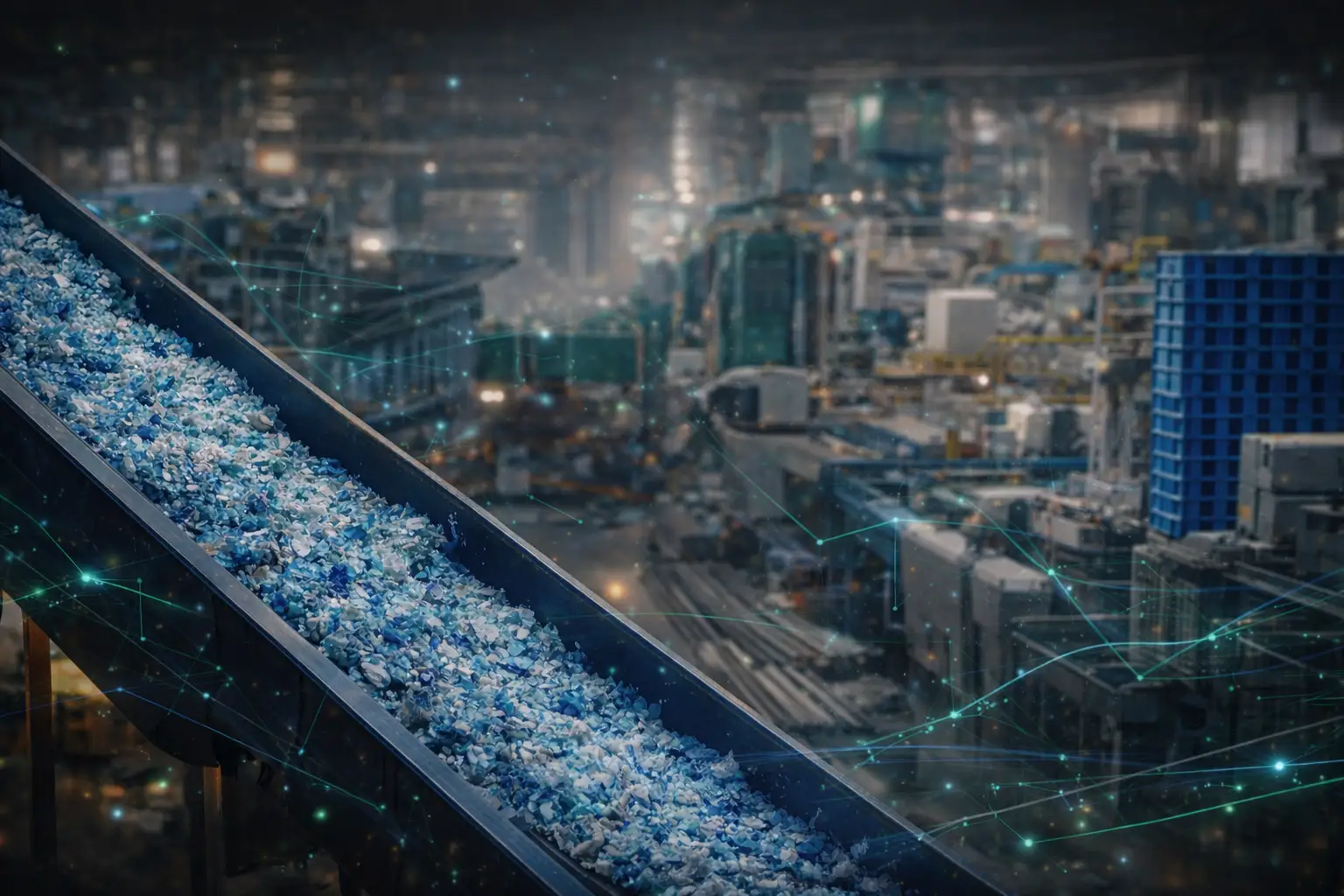

PET Recycling in the USA Complete Guide to Bottles Thermoforms Strapping Flakes Pellets and PCR
Polyethylene terephthalate, usually called PET or PETE, is a major packaging and industrial polymer in the United States. It is widely used for water and carbonated beverage bottles, food jars, clear trays, clamshells, cups, sheet, strapping, preforms and polyester fiber. Its clarity, strength and barrier performance make it useful in demanding applications. Those same properties also support established recycling markets when the material is collected, sorted and processed to a specification that an end user can verify.
The word PET does not describe one interchangeable commodity. A clear beverage-bottle bale, a thermoform-only bale, green bottle flake, post-industrial sheet trim, strapping regrind and food-contact recycled PET pellet can differ substantially in color, intrinsic viscosity, moisture, contamination, additive package and regulatory status. Buyers need material that fits their process. Sellers protect value by identifying source, form, color, processing history and measurable quality instead of relying on broad labels such as clean PET or food grade.
This guide follows PET from factory scrap and post-consumer packaging through baling, sorting, washing, flake production, extrusion and pelletizing. It explains the technical controls that influence yield and end use, the commercial information required for B2B transactions, and the way WASTEMARKT can connect U.S. generators, material recovery facilities, reclaimers, compounders, converters and manufacturers.
What Is PET
PET is a polyester made for a wide range of packaging, fiber and engineered applications. Consumer packaging commonly carries resin identification code 1. That symbol identifies the general resin family; it does not prove that every component of a package is PET, that the package is accepted by every local recycling program, or that recovered material can be used in every new product. Labels, closures, colorants, barrier layers and product residue must be considered with the base container.
PET has a higher density than water, which helps reclaimers separate it from common polypropylene and polyethylene closures during float-sink processing. It is also sensitive to moisture during melt processing. If PET is heated while insufficiently dried, hydrolysis can reduce molecular weight and weaken performance. Reclaimers and converters therefore control drying, residence time, temperature, filtration and the number of heat histories according to the intended application.
PET PETG CPET and Polyester Differences
Clear bottle-grade PET is not the same as every transparent polyester. PETG is a glycol-modified copolyester used in some rigid packages, shrink sleeves, sheet and fabricated parts. Its behavior during sorting, crystallization and melt processing can differ from conventional PET. CPET is crystallized PET used where heat resistance is required, often in trays. Multilayer containers may also combine PET with barrier polymers or adhesives. These materials should be identified rather than assumed to be compatible with a clear bottle stream.
Polyester textile fiber is chemically related to packaging PET, but textile streams may contain dyes, finishes, elastane, nylon, cotton, zippers, coatings and other components. Recycled PET fiber and packaging markets overlap in some end uses, yet a bale of bottles is not equivalent to a textile feedstock. WASTEMARKT listings should distinguish packaging, sheet, strapping, fiber and engineering grades and state whether the polymer identity is confirmed by production records or testing.
PET Recycling Market Snapshot for the 2026 Edition
The latest full NAPCOR bottle data available for this 2026 edition cover calendar year 2024. NAPCOR reported a 30.2 percent U.S. PET bottle recycling rate for 2024, compared with a revised 32.5 percent for 2023 and a ten-year average of 29.5 percent. The same report placed the North American collection rate at 39.2 percent. These figures describe bottle collection and recycling activity; they should not be presented as the recycling rate for every PET product or for all plastics.
| Published indicator | Latest reported result | How to interpret it |
U.S. PET bottle recycling rate | 30.2 percent in 2024 | Bottle-specific U.S. rate reported by NAPCOR |
| North American PET bottle collection rate | 39.2 percent in 2024 | Combined regional measure reported for the United States and Canada |
PET thermoforms recovered | 264 million lb in 2024 | United States and Canada combined and 52 percent above 2023 |
Reclamation output efficiency | 85.2 percent in 2024 | Recovered outputs divided by incoming material at U.S. and Canadian reclaimers |
Average rPET content in U.S. bottles | 15.9 percent in 2024 | Market average rather than a requirement for any individual bottle |
NAPCOR also reported that 264 million pounds of PET thermoforms were recovered in the United States and Canada in 2024, a 52 percent increase from the prior year. That growth does not mean that every thermoform is accepted everywhere or that every bottle reclaimer accepts the same percentage. Collection programs, bale specifications and reclaimer capabilities vary. Sellers should confirm the receiving specification before combining bottles and thermoforms.
Market data should be dated and attributed. A current price or plant-capacity statement can change much faster than a technical explanation of sorting or washing. WASTEMARKT should use its Price Index and active listings for current market intelligence and preserve this national guide as a durable technical reference.
The Two Main PET Waste Streams
Post Industrial PET
Post-industrial PET is generated before a finished product reaches the consumer. Examples include preform rejects, bottle start-up scrap, sheet edge trim, thermoforming skeletons, off-spec rolls, strapping trim, resin transitions, clean purge material and rejected molded components. A single-source stream can offer excellent traceability when the generator records the original resin, additive or color package, manufacturing process, reason for rejection and any change in formulation.
Clean factory scrap is not automatically ready for a demanding application. PET trim can carry paper core fragments, release liners, adhesive, printing, silicone coating, metal clips, floor dirt or another polyester. Regrind may absorb moisture during storage. A buyer should confirm whether the material has been dried, crystallized, dedusted or metal-detected and whether the lot contains only one grade. The generator should separate start-up degradation and floor sweepings from clean production trim.
Post Consumer PET and PCR
Post-consumer PET has completed its intended use and entered a collection or recovery system. Beverage bottles, food jars, household-product containers, trays, cups and clamshells are common examples. After sorting and reclamation, suitable outputs may be marketed as post-consumer recycled PET or PCR PET. The PCR description concerns source history. It does not by itself establish purity, recycled-content certification, food-contact suitability or a specific intrinsic viscosity.
Residential and commercial collection can introduce closures, labels, liquids, food, glass, metal, paper, dirt and non-PET containers. Color and package design also affect recovery. A reclaimer manages this variation through bale specifications, sampling, automated and manual sorting, washing, flake sorting and lot testing. Buyers should understand which controls stand behind a PCR claim and whether chain-of-custody documentation is required by their customer or applicable program.
Common Sources of Recyclable PET
Beverage Bottles and Food Jars
Clear and light-blue beverage bottles are a central feedstock for U.S. PET reclamation. Green bottles, amber containers and opaque or heavily colored PET may have narrower end markets because color limits the appearance of the next product. Bottles should be empty and managed under the receiving program’s rules. Polyolefin caps and neck rings can normally be separated during reclamation, but metal closures and components create contamination and equipment risk.
Thermoforms Trays and Clamshells
PET thermoforms include produce clamshells, bakery trays, deli containers, cups, tubs and other packages made by heating and forming PET sheet. They can be recycled when collection, sorting and reclaiming systems are designed to accept them. Practical challenges include large labels, strong adhesives, food residue, non-PET look-alike packages and differences in material behavior. Some reclaimers accept thermoforms in bottle bales only within agreed limits, while others buy dedicated thermoform bales.
A seller should never assume that a resin code or clear appearance makes a thermoform acceptable to a bottle buyer. Confirm whether the package is PET rather than PETG, PLA, PVC, polystyrene or another transparent resin. State how it was sorted, whether labels remain, what percentage of non-PET is allowed and whether the material meets an APR or buyer-specific bale category.
PET Strapping
PET strapping is used to secure bricks, lumber, metal coils, bottles, appliances and other heavy loads. Distribution centers and factories can generate clean cut strap or baled strapping. The stream should remain free from steel banding, polypropylene strap, buckles, seals, labels and product debris. Color, coatings and the
original tensile grade matter to buyers, so strapping should usually be marketed separately from mixed bottle material unless a reclaimer has approved the blend.
Preforms Bottles and Injection Stretch Blow Molding Scrap
Bottle plants generate preform rejects, gate scrap, start-up bottles, color-change material and quality-control rejects. Source segregation can preserve a known bottle grade and color. If the material is ground internally, the generator should document grinder screen, metal control, fines, moisture exposure and whether closures, liners or labels entered the stream. Reusable preforms or off-spec packaging should be evaluated for lawful reuse before being designated as scrap.
Sheet Rolls and Thermoforming Skeletons
Sheet extrusion and thermoforming create side trim, skeletal web, start-up sheet, rejected rolls and formed-part scrap. Recyclability depends on the complete construction. Mono-PET trim can be valuable, while laminated sheet, printed stock, silicone-coated material and PETG require a different route. Listings should state thickness, layer structure, color, coating, roll dimensions, reason for rejection and whether the scrap has contacted food or another product.
Polyester Fiber Textiles and Industrial Components
Carpet, apparel, nonwovens, fiberfill, rope and automotive textiles can contain polyester, but the word polyester is not a complete specification. Dyes, coatings, blends and attachments can change the recycling route. Industrial PET compounds may include glass fiber, mineral filler, flame retardants or impact modifiers. Those materials belong in clearly identified engineering or textile streams rather than bottle-grade offers.
PET Material Forms Traded in the Market
Loose Containers and Production Scrap
Loose material is easy to inspect but inefficient to ship. A container load can reach its volume limit before achieving an economical payload. Generators should remove unrelated waste, drain liquids, protect the material from weather and keep different colors or product histories separate. Photos should show the average condition of the entire lot, including labels and contamination, rather than a small hand-picked sample.
Bottle and Thermoform Bales
Bales improve storage and freight density, but quality inside the bale must match its surface. NAPCOR explains that current voluntary model specifications distinguish PET bottle bales without thermoforms, PET bottle bales with thermoforms, and PET thermoform bales. The grades are based on the PET fraction by weight before processing and use an accompanying sampling method. Contract documents should identify the exact bale type, grading basis and buyer-specific exceptions.
Regrind and Unwashed Flake
Regrind or unwashed flake is size-reduced PET that still may contain labels, closures, fines, dirt, moisture or another polymer. Particle size affects screening, conveying and wash-line feed. A useful listing states source,
previous sorting, grinder size, bulk density, color composition, fines, metals, moisture and whether cap-and-label material has been removed. The word flake alone does not mean washed or ready for direct conversion.
Cold Washed and Hot Washed Flake
Washed PET flake can be sold at several quality levels. Hot washing is commonly used to remove adhesive, product residue and surface contamination, but the term does not define temperature, chemistry, residence time or final purity. Buyers should request a written specification covering PVC, polyolefins, metals, paper, glue, fines, moisture, color and black specks. A retained reference sample and agreed test methods reduce disputes over descriptive terms.
Recycled PET Pellets
Recycled PET pellets may be amorphous or crystallized and may receive additional treatment to restore or raise molecular weight for a target application. Pellet form improves handling but does not establish bottle-grade or food-contact status. Buyers should review source, intrinsic viscosity, moisture, color, contamination, acetaldehyde where relevant, filtration, bulk density, regulatory documentation and performance on their equipment.
Purges Lumps Fines and Byproducts
Start-up purges and lumps may retain value when the grade and color are known, although large pieces require suitable shredding. Fines from grinding and flake sorting can behave differently in washing, drying and conveying and should be listed separately when they exceed the buyer’s limit. Labels, caps, float fraction and mixed residue are byproducts with their own possible markets; they should not be blended back into higher-value PET to increase shipment weight.
How the PET Recycling Process Works
Receiving Sampling and Bale Inspection
The reclaimer verifies supplier, source, bale type, weight, packaging and visible condition before processing. Representative sampling matters because contamination can vary between bales and between the surface and core. Incoming records should connect photographs, supplier declaration, sample results and disposition to a lot of code. Loads with chemicals, pressurized containers, excessive liquid, medical waste or other unsafe material require a defined quarantine and rejection procedure.
Debaling Metering and Presorting
Bales are opened under controlled conditions and wires or straps are removed before size reduction. Screens can remove small glass and debris, magnets capture ferrous metal, and manual or automated stations remove large contaminants. Even feed protects optical sorters and grinders from surges. Safe wire cutting, machine guarding, lockout procedures, fire prevention and housekeeping are essential operating controls.
Optical Sorting and Color Separation
Near-infrared and color sorting systems can separate PET from other resins and divide clear, light-blue, green, opaque and mixed-color packages. Performance depends on object presentation, sensor configuration, label coverage, package color and contamination. Full-body sleeves and dark or multilayer packages can make identification more difficult. Automated sorting therefore works best with source control, equipment maintenance, quality checks and targeted manual inspection.
Grinding and Air Separation
Granulators cut containers into flake suitable for washing and separation. Knife condition, screen size and feed rate affect particle shape, fines and throughput. Air classification can remove light labels and dust. Metal detection protects downstream equipment. Reclaimers monitor wear because dull knives and inconsistent feed increase heat, fines and power use while reducing the uniformity of the flake.
Washing and Float Sink Separation
Wash systems may combine prewashing, friction washing, hot caustic washing, rinsing and mechanical separation. Because PET sinks in water while common polypropylene and polyethylene closures float, a float-sink stage can remove much of the cap and label fraction. Density separation cannot solve every problem. PVC and some other contaminants may remain with PET, while adhesives and fine particles require suitable chemistry, agitation, filtration and rinsing.
Drying and Flake Sorting
After washing, mechanical and thermal drying reduce surface moisture. Optical flake sorters can target color and polymer contamination that escaped container sorting. Screens and air systems control fines and lightweight residue. Lot tests should be connected to the intended market because a fiber buyer, sheet extruder and bottle-resin producer may use different limits.
Extrusion Filtration and Pelletizing
Clean flake may be used directly in selected processes or melted, filtered and pelletized. Extrusion homogenizes the feed and removes solid contamination through screen packs or continuous filters. Vacuum systems can reduce moisture and volatile material. Excessive residence time, heat or moisture can degrade PET. Stable feeding, drying and temperature control are therefore as important as a fine filter.
Crystallization and Molecular Weight Management
PET pellets may be crystallized to prevent sticking during high-temperature drying. Solid-state polycondensation or other approved processes can increase intrinsic viscosity and support demanding bottle, sheet or strapping applications. The required route depends on feedstock and end use. A supplier should not claim that a pellet is bottle grade merely because it has been crystallized; the complete specification and regulatory status still control approval.
Testing and Lot Release
A release program can include polymer purity, color, intrinsic viscosity, moisture, bulk density, fines, PVC, polyolefin, metal, paper, glue, black specks and other application-specific tests. Bottle and food-packaging applications may add acetaldehyde, contaminant challenge data, migration-related documentation and process controls. Buyers should agree on methods, units, sample preparation and the laboratory result that controls when measurements differ.
Quality Specifications Buyers Should Request
A commercial specification converts words such as clear, clean, washed and bottle grade into measurable requirements. The parties should define a lot, sampling frequency, test method, reporting format and corrective action. Limits vary by process, so the table below identifies the fields to agree rather than universal pass-or-fail values.
| Quality field | What the listing or specification should state |
Source | Bottle deposit stream, curbside MRF, thermoform collection, factory preforms, sheet trim, strapping, fiber or another traceable origin |
Material category | Bottle bale, bottle and thermoform bale, thermoform bale, regrind, unwashed flake, washed flake or pellet |
Polymer identity | Conventional PET, PETG, CPET, multilayer PET, textile polyester or filled engineering compound |
Color | Clear and light blue, green, amber, opaque, black or mixed color with agreed composition |
Non PET contamination | Limits for PVC, PETG, PLA, polyolefins, paper, labels, glue, metal, glass, dirt and organics |
Physical condition | Particle size, fines, bulk density, bale weight, loose material, moisture exposure and storage condition |
Polymer performance | Intrinsic viscosity, melt behavior, crystallinity or application tests with method and range |
Appearance | Color values, yellowing, black specks, haze and visible contamination |
Processing history | Sorting, grinding, wash type, drying, flake sorting, filtration, pelletizing and molecular weight treatment |
Regulatory records | PCR evidence, chain of custody, FDA submission or no-objection documentation where applicable, and customer approvals |
Packaging and lot | Bale, gaylord, supersack or bulk format, liner, net weight, pallet condition, lot code and loading method |
Why Intrinsic Viscosity Moisture and Color Matter
Intrinsic viscosity is used as an indicator of PET molecular weight and processing capability. Different bottle, sheet, fiber and strapping applications can require different ranges. The reported value is meaningful only with a test method and sample condition. Buyers should avoid selecting resin from one number alone because contamination, color, crystallinity, moisture and actual production behavior also determine whether the material works.
PET absorbs moisture from the environment. During melt processing, retained water can shorten polymer chains and reduce intrinsic viscosity. Dry storage and controlled drying therefore protect value from flake production through conversion. A sealed package does not guarantee low moisture if material was packed warm, stored outdoors or exposed during loading. Purchase terms should define moisture limits and test timing.
Color is both a quality characteristic and an end-market constraint. Clear and light-blue PET can support a wider range of visible applications than green, amber, opaque or mixed-color material. Repeated heat history and contamination can increase yellowing or haze. Sellers should provide representative samples under consistent lighting and objective color data when the application requires it.
Application Based Sourcing
Bottle to Bottle and Food Packaging
Bottle-to-bottle recycling requires tight control of feedstock, decontamination, molecular weight, color and regulatory suitability. In the United States, FDA guidance asks manufacturers to evaluate the chemistry and contaminant-removal capability of a recycling process used for food-contact material. FDA may issue a no-objection letter for a reviewed process, but that letter is tied to the described process and conditions. It is not a blanket approval for any rPET pellet or any feedstock.
Thermoformed Sheet and Packaging
Recycled PET is used in sheet and thermoforms for food and non-food applications. Sheet extrusion needs stable drying, viscosity, filtration and color. Trays and clamshells may incorporate multilayer structures or functional layers, so recycled-content claims should state how the percentage is calculated. Food-contact use requires the converter to confirm that the resin, process and intended conditions meet applicable requirements.
PET Strapping
Strapping demands tensile strength, elongation, joint performance and dimensional consistency. Flake or pellets selected for strapping must fit the line and load specification. Mixed colors may be acceptable for dark strapping, but metal, polypropylene and moisture can create serious problems. Production trials should include the actual strap dimensions, embossing, joining method and load conditions.
Fiber Carpet and Nonwovens
Fiber has long been an important outlet for recycled PET. The required flake size, color and contamination limits vary among staple fiber, filament, carpet, nonwovens and fiberfill. A buyer may tolerate color that a clear bottle producer cannot, while still requiring strict control of PVC, metal, glue and moisture. The seller should identify whether the material is suitable for direct flake use or needs pelletizing and additional filtration.
Engineering Compounds and Durable Products
Recycled PET can be compounded with glass fiber, minerals, impact modifiers and stabilizers for selected durable products. These markets evaluate mechanical properties, heat performance, moisture, contamination
and consistency rather than packaging appearance alone. Filled or flame-retarded PET scrap should remain segregated and be sold with formulation data because it is not equivalent to bottle or sheet material.
Key Contaminants and Failure Modes
PVC PETG PLA and Other Look Alike Polymers
Clear PVC, PETG and PLA packaging can resemble PET during visual inspection. PVC is particularly damaging in PET melt processing, while PETG and PLA can also disrupt crystallization, filtration, clarity or product performance. Optical sorting, source records and targeted laboratory checks reduce the risk. A seller should disclose uncertain or mixed clear-plastic streams rather than describe them as PET from appearance alone.
Labels Sleeves Adhesives and Inks
Labels and sleeves can block optical identification, remain with flake or introduce ink and adhesive. Wash-off performance depends on the label construction, adhesive, ink and wash conditions. Large paper labels increase fiber and glue residue. Metalized labels and metal components add equipment risk. Package designers should consult the current APR Design Guide before specifying a label, closure or decoration for a PET package.
Metals Glass Sand and Product Residue
Metal damages knives and creates safety and quality problems. Glass and sand increase wear, reduce yield and can remain as dense contamination. Food, oil, household chemicals and other residues affect wash demand, odor and wastewater. Programs should define which containers are acceptable and how they must be emptied. Reclaimers need an escalation route for unknown chemicals and unsafe loads.
Opaque Colors and Multilayer Structures
Opaque pigments, barrier layers and additives can reduce the value of clear rPET or create haze and filtration residue. Some functional packages can be recycled in controlled systems, but compatibility must be demonstrated. A resin code on the base component does not describe the complete package. Designers and buyers should evaluate the full construction and the receiving market.
Moisture Heat History and Degradation
PET that is wet, overheated or held too long in the melt can lose molecular weight, yellow or form degradation products. A material may look clean and still process poorly because of its prior thermal history. Drying records, intrinsic-viscosity testing and controlled trials are more reliable than appearance. Sellers should disclose whether scrap has already passed through multiple extrusion or molding cycles.
How to Buy PET Scrap Flake and Pellets
Start with the final product and work backward. A bottle producer, thermoformer, strap manufacturer and fiber mill should not use the same generic purchase description. Define required source, material category, color, purity, intrinsic viscosity, moisture, form, packaging and regulatory records. Then screen suppliers against those requirements and request a representative sample that reflects routine production rather than a laboratory-picked portion.
A trial should document incoming weight, actual yield, wash loss, screen changes, drying behavior, extrusion stability, color, viscosity and finished-product performance. Compare total usable cost, not only price per pound. A lower-priced bale with high non-PET content, moisture or color loss can cost more per pound of approved rPET than a cleaner load. Freight, disposal and downtime belong in the calculation.
For recurring business, qualify the facility and the process as well as the first lot. Review change control, lot coding, calibration, retained samples, complaint history and capacity. Specify how either party may retest disputed material and how quickly a claim must be raised. A second qualified source can improve continuity, but each source should be approved separately.
How to Sell PET More Effectively
Use a title that combines polymer, source, form and the most important differentiator. Clear post-consumer PET bottle bale with thermoforms is more useful than plastic bottles. Hot-washed clear PET flake from deposit bottles tells the buyer what to investigate. If the source or composition is uncertain, say so and avoid unsupported terms such as one hundred percent pure, FDA approved or food grade.
Publish the facts a buyer needs to qualify the stream: source, bale or product category, clear-versus-colored composition, labels and closures, known contaminants, processing history, test results, monthly quantity, minimum order, packaging, loading location and availability. Use current photographs of typical material, bale interiors and packaging. Connect certificates and laboratory reports to the lot and issue date.
Segregation often creates more value than additional handling after materials are mixed. Keep clear bottles, green bottles, thermoforms, strapping, preforms, sheet trim, PETG and floor material in separate labeled containers. Protect flake and regrind from moisture. When a resin, label, coating or color changes, notify the buyer before the next shipment.
What Determines the Price of Recycled PET
PET prices move with virgin resin conditions, beverage demand, collection volumes, recycled-content demand, imports, regional reclaimer capacity and freight. Within the same market, value depends on source, color, PET percentage, thermoform content, moisture, contamination, processing level, intrinsic viscosity, certification and regulatory suitability. Clear bottle bales, mixed-color flake and food-contact pellets are different products and should not share one undifferentiated benchmark.
Commercial comparisons must use the same delivery basis and quality level. Ex works, free on truck and delivered pricing allocate freight differently. A wet bale can distort weight, while a low-density loose load can increase transport cost. WASTEMARKT Price Index pages should show the date, geography, specification, unit and delivery basis and should separate observed listings from completed transactions or editorial estimates.
Logistics and Packaging for PET
Bottle and thermoform bales should have stable dimensions, secure wires, accurate weights and safe stacking. Damaged or protruding wires create handling risk. Flake, regrind and pellets are commonly shipped in lined gaylords, supersacks, bags or bulk equipment selected for the buyer’s unloading system. Moisture barriers and covered loading are important because processed PET can absorb water during transport and storage.
Every shipment should carry a material description, lot number, net and gross weight, package count and applicable handling information. Inspect trailers and containers for water, odor, residue and holes before loading. Record seal numbers and loading photographs. Export transactions need additional customs, waste-shipment and destination-country review; the parties should confirm current requirements before booking freight.
Operating Controls for Factories That Generate PET Scrap
Place labeled containers at the machine, quality area or packaging line where scrap is created. The label should identify resin, grade, color, process, date and whether the material is pre-consumer or has contacted a product. Color changes, PETG, multilayer sheet, floor sweepings, metal-bearing strapping and maintenance waste need separate routes. A quarantine container gives operators a safe place for uncertain material.
Storage should keep material dry, contained and away from general waste. Regrind systems need guarded equipment, sharp knives, metal protection, dust control and documented cleaning between grades. Facilities should assess fire and combustible-dust risks for their specific operation and follow applicable codes and safety procedures. Packaging must remain stable through forklift handling and transport.
Management can track scrap per production unit, percentage captured as clean single-grade material, internal regrind use, bale density, moisture claims, recycling yield and destination. Cause codes should distinguish start-up, trim, color change, quality rejection and damage. These records support waste prevention and show whether an in-house grinder, baler or crystallizer would improve economics.
Commercial Due Diligence Before the First Transaction
Confirm the legal company name, operating address, website, business contact and actual facility capability. Clarify ownership of the material, inspection rights, freight responsibility, payment terms and the point where title and risk transfer. For recurring or high-value business, use a facility visit, live process review or independent inspection when appropriate. Verify unexpected bank-detail changes through a known channel.
Material due diligence should connect the approved sample to the shipped lot. Agree on sampling, test methods, acceptable variation and the controlling result if laboratories differ. Purchase documents should define grade, packaging, weight basis, delivery term, rejection process, claims period and responsibility for disposal or return. A short trial contract can expose technical and logistical problems before annual volumes are committed.
Food Contact and Recycled Content Claims
Food-contact suitability requires more than clean appearance or a resin code. FDA’s July 2021 guidance identifies chemical contamination as a central issue in evaluating recycled plastics for food packaging and recommends source controls and evidence that the recycling process removes potential contaminants.
Guidance is not a substitute for legal review, customer approval or good manufacturing practice. Companies should use current FDA records and the conditions associated with the relevant process.
A PCR percentage should be supported by a defined calculation and credible records. Chain-of-custody certification may be required by a customer, state program or corporate policy. Avoid broad environmental
claims that cannot be substantiated. State the resin, source category, percentage, product scope, time period and verification method so a buyer or regulator can understand exactly what is being claimed.
Designing PET Packaging for Better Recycling
Recycling performance begins during package design. APR guidance evaluates the PET base resin together with additives, color, labels, adhesives, sleeves, closures, dispensers and other components. A package can contain mostly PET and still interfere with sorting or reclamation. Design teams should consult the current guide and use recognized test protocols when a feature falls outside established preferred guidance.
Clear or light-blue packaging generally preserves more color options for recycled resin. Labels and sleeves should allow sorting and separation under the intended system, and closures should avoid metal parts that remain with PET. The exact design decision must still protect the product, meet safety requirements and function through filling, distribution and use. Recyclability should be evaluated on the complete package and actual collection context.
Regional Opportunities Across the United States
PET generation and demand follow beverage bottling, food packaging, retail distribution, logistics, thermoforming, textile production and manufacturing. California and New York combine large consumer markets with evolving packaging policy. Texas, Georgia, Florida and Louisiana connect population growth, beverage distribution, manufacturing and ports. Illinois, Ohio and Michigan provide dense industrial and logistics corridors, while New Jersey links Northeast population centers, warehousing and port infrastructure.
State pages should add current local information rather than repeat this national guide. Useful content includes accepted PET formats, major cities and industrial corridors, deposit-system or EPR context where applicable, reclaimers and end-market categories, freight lanes, ports, events and live WASTEMARKT listings. Every regulatory statement should be checked on the publication date because state requirements and implementation schedules can change.
How WASTEMARKT Connects the PET Supply Chain
WASTEMARKT connects companies that generate, sort, reclaim, buy and sell recyclable materials. A bottling plant can list recurring preform or bottle scrap, a MRF can offer a defined PET bale, a thermoformer can publish clean sheet skeletons, a reclaimer can sell washed flake or pellets, and a manufacturer can post a request with technical and monthly-volume requirements.
Strong marketplace listings make technical qualification faster. Every PET offer should state source, material category, color, thermoform content, contamination, form, processing history, test data, quantity, frequency, packaging, location and commercial terms. Verified company profiles, representative photographs and traceable lot documents help counterparties move from first contact to sampling and a controlled trial.
Companies can also use WASTEMARKT to find PET recycling machinery, washing lines, optical sorters, dryers, extruders, pelletizers, logistics providers and related services. The marketplace supports discovery and communication. Each party remains responsible for technical approval, contracts, regulatory review, payment controls, freight and shipment acceptance.
Frequently Asked Questions About PET Recycling
Is PET recyclable ?
Yes. PET bottles, many thermoforms and several industrial PET streams can be mechanically recycled when collection, sorting and reclamation systems can produce material for a defined end market. Acceptance varies by program and package design, so the resin code alone is not a guarantee.
What is resin identification code 1 ?
Code 1 identifies the PET or PETE resin family on many consumer packages. It does not show the full package construction, confirm local collection access or prove compatibility with every PET reclaimer.
What is rPET ?
rPET means recycled polyethylene terephthalate. It may be produced from post-consumer packaging, post-industrial scrap or a defined blend. Buyers should request the source category and supporting records rather than assume every rPET product is PCR.
What is PCR PET ?
PCR PET is PET recovered after consumer or commercial use and processed for reuse. The term describes source history. It does not automatically establish purity, certification, food-contact suitability, color or performance.
What is post industrial PET ?
Post-industrial PET is generated during resin conversion or manufacturing before a product reaches the consumer. Preform rejects, sheet trim, thermoforming skeletons, strapping trim, start-up bottles and clean regrind are common examples.
Can PET bottles and thermoforms be recycled together ?
Some reclaimers accept auto-sorted bottle bales containing agreed amounts of PET thermoforms, while others use bottle-only or thermoform-only specifications. The seller must confirm the buyer’s current bale requirements before mixing them.
Can PET caps stay on bottles ?
Plastic caps and neck rings are commonly made from polypropylene or polyethylene and can be separated from PET in float-sink processing. Metal closures and metal components are contaminants and should be managed according to the receiving program’s rules.
Why is PVC a problem in PET recycling ?
PVC can resemble PET and may remain with the dense PET fraction. Small amounts can degrade at PET processing temperatures and harm color and product quality. Sorting and agreed contamination limits are critical.
Is PETG the same as PET ?
No. PETG is a glycol-modified copolyester with different processing and crystallization behavior. It may be unsuitable for a conventional PET bottle stream unless the buyer has specifically approved it.
What is hot washed PET flake ?
Hot-washed flake is size-reduced PET cleaned in a heated wash process intended to remove residue, labels and adhesive. The term does not define final purity, so buyers should request measurable limits and test data.
What is intrinsic viscosity in recycled PET ?
Intrinsic viscosity is an indicator related to PET molecular weight and processing capability. Target ranges differ among bottles, sheet, fiber and strapping. The value should be reported with a test method and evaluated with the full specification.
Why must PET be dried before extrusion ?
PET absorbs moisture. Heating wet PET can cause hydrolysis that shortens polymer chains and reduces performance. Controlled drying and protected storage help preserve molecular weight during extrusion and molding.
Can recycled PET be used for food packaging ?
It can be used when the resin, recycling process, manufacturing controls and intended application meet applicable FDA and customer requirements. A PCR label or clean pellet appearance is not enough.
Does FDA approve recycled PET pellets ?
FDA evaluates recycling-process submissions and may issue a no-objection letter under stated conditions. Companies should avoid using the word approved as a blanket claim and should verify that the material and use match the relevant documentation.
How are PET bottle bales graded ?
Current voluntary model specifications use defined bale types and grades based on the PET fraction by weight before processing, supported by a sample test method. Buyer-specific limits can add requirements for color, thermoforms and contaminants.
Can PET strapping be recycled ?
Yes, clean PET strapping can be recycled when it is separated from polypropylene strap, steel banding, buckles and debris. Color, coatings and original grade should be disclosed because strapping buyers have application-specific requirements.
How should PET flake be packaged ?
Flake and regrind are commonly shipped in lined gaylords, supersacks or bulk systems that keep the material dry and contained. Packages should carry material, lot, net weight and handling information.
How is recycled PET priced ?
Price depends on source, color, PET percentage, contamination, moisture, form, processing level, intrinsic viscosity, certification, quantity, location, freight and current supply and demand. Compare the same specification and delivery basis.
How can a factory sell recurring PET scrap ?
Separate the material by grade, color, process and source; protect it from moisture and contamination; document volume, packaging and test data; provide representative photographs; and publish a detailed offer for qualified buyers.
Where can companies buy or sell PET in the USA ?
Companies can use WASTEMARKT to publish offers and requests for PET bottles, thermoforms, strapping, bales, preforms, sheet scrap, regrind, washed flakes and recycled pellets and connect by material and location.
Conclusion Building a Reliable PET Raw Material Stream
PET recycling works when the feedstock and the end use are connected by measurable quality controls. Generators preserve value through segregation and dry storage. MRFs and reclaimers apply bale specifications, sorting, washing and testing. Sellers describe the material accurately, and buyers qualify it with representative samples and documented trials. Those steps matter more than a broad claim that the material is recyclable or food grade.
For U.S. companies, the commercial opportunity extends from beverage bottles to thermoforms, strapping, preforms, sheet trim, bales, flakes and rPET pellets. WASTEMARKT can make those streams visible to the right counterparties, provided listings state the source, color, form, contamination, processing history, test data and delivery terms that determine real manufacturing value.
BUY | SELL | CONNECT
List PET bottles thermoforms strapping bales flakes regrind and recycled pellets on WASTEMARKT
Register and add your offers at www.wastemarkt.com


