
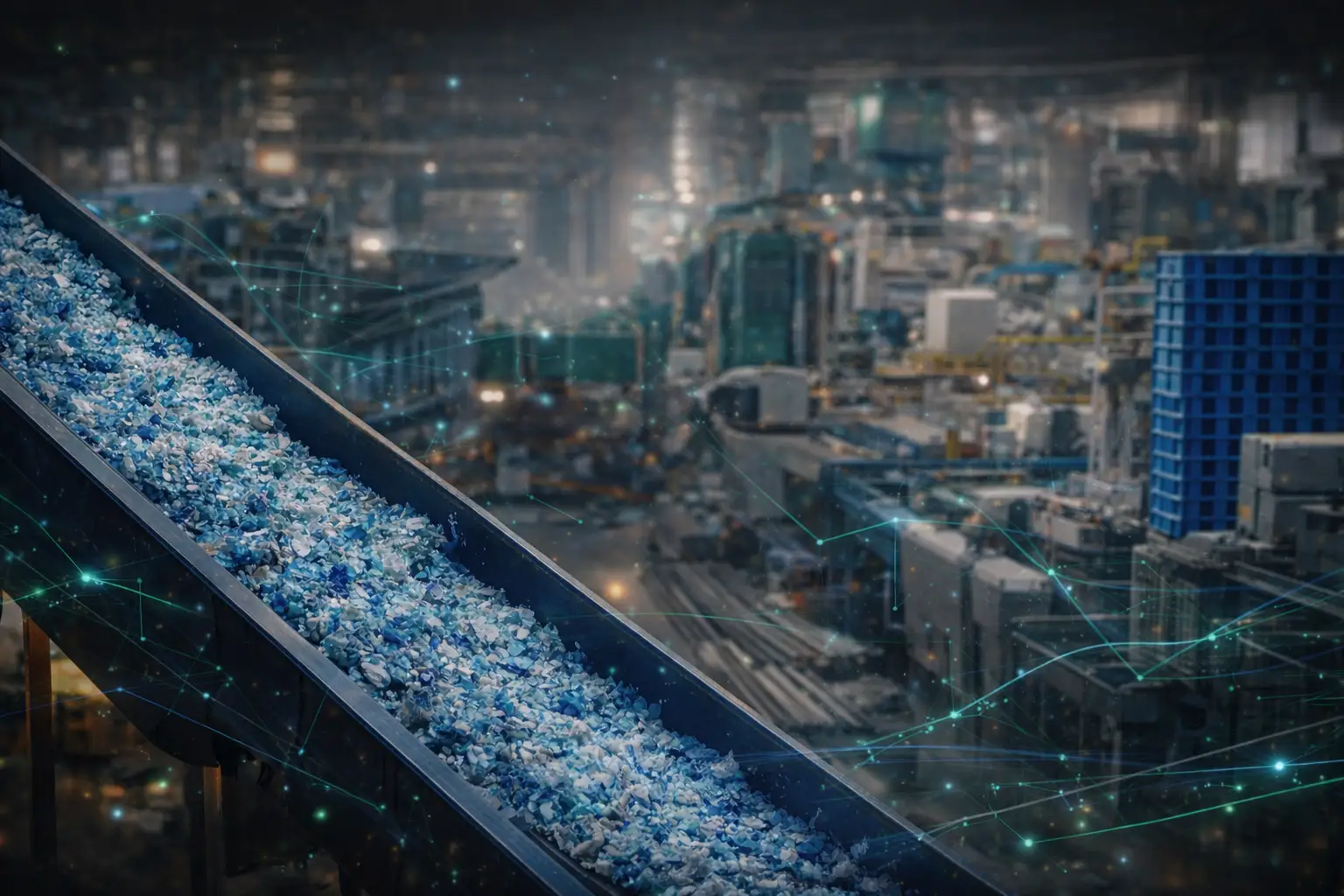

Plastic film is widely used across industries, from food packaging to agriculture and construction. Once these films reach the end of their intended use or become manufacturing waste, they still retain significant value. Through modern recycling processes, film scraps can be converted into high-quality regranulates that are ready for reuse in new manufacturing applications.
At WasteMarkt, we believe that efficient plastic film recycling helps businesses recover valuable materials while reducing environmental impact and supporting a circular economy.
Two Main Sources of Plastic Film Waste
Plastic film waste generally falls into two categories, each requiring a different collection process but offering excellent recycling potential.
Post-Industrial Film (PIR)
Post-Industrial Recycling (PIR) refers to clean plastic film waste generated during manufacturing.
This material often includes:
- Film on rolls
- Film offcuts
- Production scrap
- Film in bales
- Sweep floor granules
- Excess packaging film
Because these materials have not been used by consumers, they are usually clean, consistent, and easier to recycle.
Post-Consumer Film (PCR)
Post-Consumer Recycling (PCR) involves plastic film collected after it has been used.
Common sources include:
- Agricultural film
- Construction film
- Municipal collection programs
- Selective waste collection systems
- Commercial packaging waste
Although PCR materials often require additional sorting and cleaning, they remain an important resource for plastic recycling.
Recycling Different Types of Plastic Film
Modern recycling facilities process a variety of plastic films to recover valuable polymers.
The most commonly recycled materials include:
- LDPE (Low-Density Polyethylene)
- HDPE (High-Density Polyethylene)
- PP (Polypropylene)
- PET (Polyethylene Terephthalate)
- LDPE/PA multilayer film
- PVC film
After sorting, washing (when required), shredding, and extrusion, these materials are converted into recycled plastic regranulates suitable for many manufacturing applications.
Agricultural and Construction Film Recycling
Agricultural and construction industries generate large quantities of used plastic film every year.
Examples include:
- Greenhouse film
- Silage wrap
- Protective construction sheeting
- Temporary building covers
These materials are frequently collected through PCR recycling systems. After proper processing, they become a valuable source of recycled plastic instead of ending up in landfills.
Why Municipal Film Is More Challenging
Among all post-consumer plastic films, municipal LDPE film is generally the most difficult to recycle.
Household film often contains:
- Dirt
- Food residue
- Moisture
- Mixed materials
- Unpleasant odors
Before recycling can begin, these contaminants must be removed through cleaning and preparation. Once processed correctly, municipal film can still be transformed into reusable recycled plastic.
Film Bales: An Important Part of Global Plastic Recycling
Plastic film is commonly compressed into bales to simplify transportation and storage.
Across international recycling markets, traders buy and sell film bales containing various grades of plastic film. Recycling facilities purchase these materials, process them, and manufacture recycled plastic regranulates that can be supplied back to manufacturers.
This trading network plays an important role in maintaining a consistent supply of recyclable plastic materials.
Understanding LDPE/PA Film
One of the fastest-growing materials in industrial recycling is LDPE/PA multilayer film.
This specialized packaging film is produced using virgin LDPE combined with approximately 20% polyamide (PA), providing additional strength and durability.
LDPE/PA film is commonly used for vacuum packaging:
- Meat
- Seafood
- Cheese
- Other food products
The material is usually transparent but may also be available in blue or red. Typical thickness ranges from 50 to 320 microns, depending on the intended packaging application.
As production increases, more post-industrial LDPE/PA film becomes available for recycling.
PP Film Recycling
Polypropylene film is another valuable material within the recycling industry.
Manufacturing facilities often generate PP film waste in rolls or compressed bales. After recycling, the material is processed into PP regranulate, which can be reused in the production of various plastic products. Recovering PP film helps reduce raw material consumption while extending the life cycle of valuable polymers.
Benefits of Recycling Plastic Film Scraps
Recovering plastic film scraps offers advantages for manufacturers, recyclers, and the environment.
Key benefits include:
- Reduced plastic waste
- Lower dependence on virgin polymers
- Improved resource efficiency
- Greater material recovery
- Support for sustainable manufacturing
- Contribution to the circular economy
Every recycled film scrap represents an opportunity to recover valuable plastic instead of sending it to disposal.

WasteMarkt’s Commitment to Plastic Film Recycling
WasteMarkt supports responsible recycling by promoting the recovery of valuable plastic film materials generated by manufacturers and industrial operations.
Whether handling post-industrial film rolls, film bales, LDPE/PA packaging film, or post-consumer agricultural plastics, effective recycling creates long-term value while supporting more sustainable production practices.
Frequently Asked Questions
1. What is plastic film recycling?
Plastic film recycling is the process of collecting, processing, and converting used or production film into reusable plastic regranulates.
2. What is the difference between PIR and PCR plastic film?
PIR comes from manufacturing waste, while PCR comes from plastic that has already been used by consumers.
3. Which plastic films are commonly recycled?
LDPE, HDPE, PP, PET, LDPE/PA, and PVC films are commonly recycled.
4. What are film bales?
Film bales are compressed bundles of plastic film prepared for storage, transportation, and recycling.
5. Why is LDPE/PA film widely used?
Its polyamide layer improves strength, making it suitable for vacuum food packaging.
6. What products are packaged using LDPE/PA film?
It is commonly used to package meat, seafood, cheese, and other food products.
7. Why is municipal LDPE film harder to recycle?
It often contains dirt, food residue, moisture, and odors that require additional cleaning before processing.
8. What is plastic regranulate?
Regranulate is recycled plastic produced through mechanical recycling and used as raw material in new manufacturing.
Conclusion
Plastic film scraps are far more than manufacturing waste. Whether sourced from post-industrial production or post-consumer recycling programs, LDPE, PP, HDPE, PET, and LDPE/PA films can be processed into high-quality regranulates for future manufacturing.
With efficient collection, proper sorting, and advanced recycling techniques, businesses can recover valuable materials while reducing environmental impact. WasteMarkt remains committed to encouraging practical and sustainable plastic recycling solutions for industries worldwide.


