
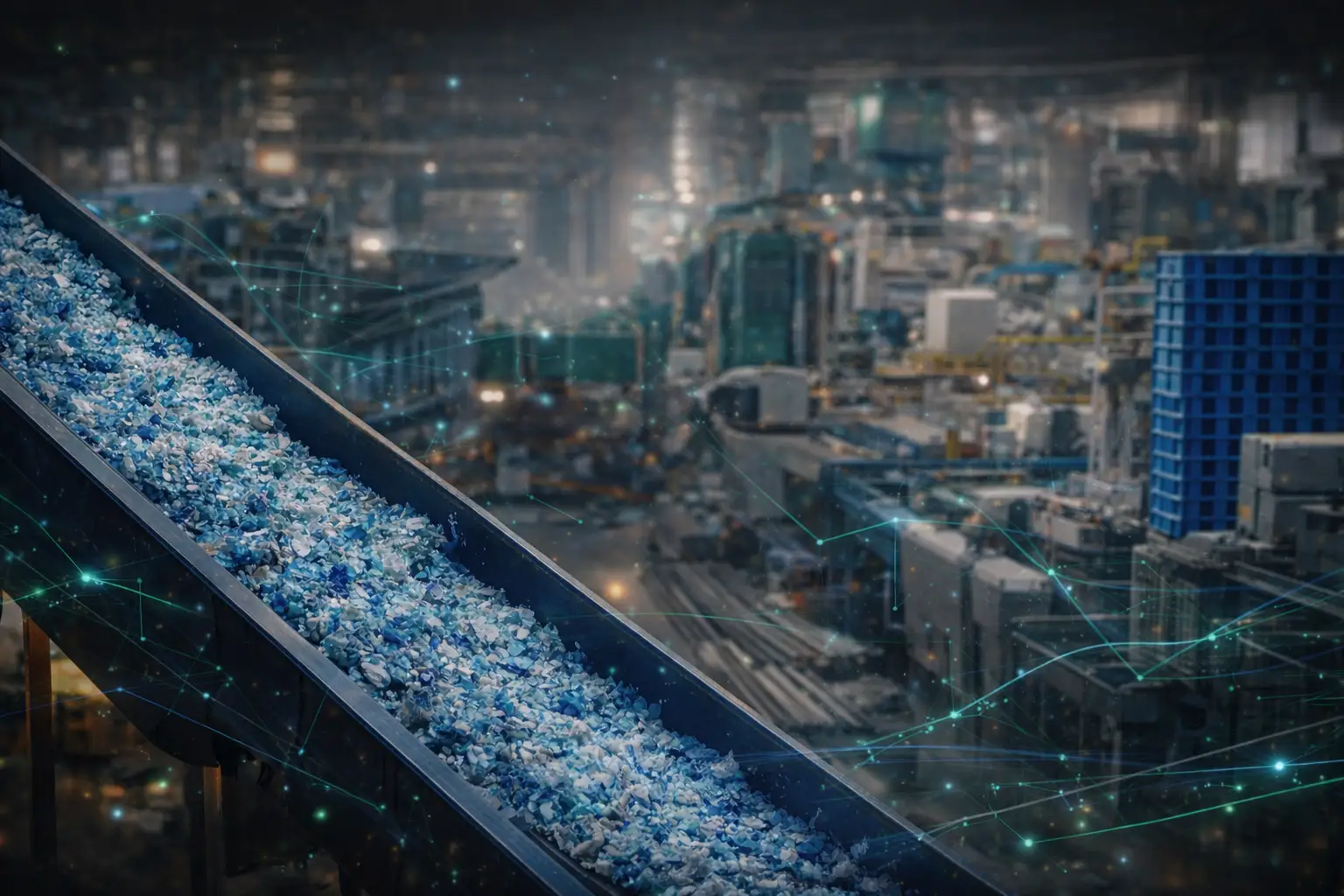

Plastic manufacturing creates valuable products, but it also generates production waste that should never be overlooked. Materials such as post-industrial plastic purges and production lumps can be recovered, processed, and returned to the manufacturing cycle instead of being discarded. Efficient recycling reduces waste, lowers production costs, and supports a more sustainable plastics industry.
At WasteMarkt, we recognize the value of industrial plastic waste and support businesses seeking practical recycling solutions for high-quality plastic materials.
Understanding Plastic Purges
Plastic purges are solid masses of plastic generated during equipment cleaning or material changeovers in manufacturing. They are commonly produced during:
- Injection molding
- Extrusion
- Blow molding
When production lines switch between materials or colors, leftover molten plastic is removed from the machinery. Once cooled, this material becomes a plastic purge.
Although purges cannot usually be returned directly to production, they contain valuable raw material that can be recycled into reusable plastic.
What Are Plastic Lumps?
Plastic lumps are another form of post-production waste created during the manufacturing of plastic films. They are commonly generated while producing:
- LDPE film
- LDPE/PA film
- HDPE film
- PET film
Instead of treating these dense plastic pieces as waste, manufacturers can process them into reusable raw material through mechanical recycling.
Converting Plastic Lumps into Regrind
One of the most effective methods for recycling plastic lumps is mechanical size reduction.
A single-shaft crusher breaks large plastic lumps into smaller pieces, producing regrind suitable for further processing. The resulting material can often be incorporated into new manufacturing applications, depending on quality requirements.
This approach helps manufacturers:
- Recover valuable plastic.
- Reduce disposal costs.
- Improve material efficiency.
- Support sustainable manufacturing practices.
Common Plastic Materials Recycled
Several thermoplastics generated during industrial production can be successfully recycled.
LDPE (Low-Density Polyethylene)
LDPE is widely used in flexible packaging, industrial films, and protective wrapping. Clean production waste can be processed into quality regrind for various manufacturing applications.
HDPE (High-Density Polyethylene)
HDPE is known for its strength and durability. Production purges and lumps from HDPE manufacturing are well suited for recycling into reusable material.
PP (Polypropylene)
Polypropylene is frequently used in automotive components, packaging, and industrial products. Production waste generated during processing can be recovered and recycled efficiently.
PET (Polyethylene Terephthalate)
PET is commonly used in packaging and industrial applications. Post-production PET lumps can be crushed and processed into valuable recycled material.
Why Post-Production Plastic Waste Is Ideal for Recycling
Compared with post-consumer plastic waste, post-production material offers several advantages.
These materials are:
- Clean and uncontaminated.
- Easier to identify by polymer type.
- Consistent in composition.
- More efficient to process.
- Suitable for producing high-quality regrind.
Because they originate directly from manufacturing facilities, additional cleaning and sorting requirements are significantly reduced.
Storage and Transportation
Many manufacturers package post-production plastic purges and lumps in octabins for easier storage and transportation.
This packaging method offers several benefits:
- Safe handling.
- Efficient warehouse storage.
- Reduced contamination.
- Simplified transportation.
- Faster loading and unloading.
Proper packaging also helps recyclers maintain material quality throughout the recycling process.
Recycling Plastic Purges in the United States
Across the United States, manufacturers producing LDPE, HDPE, PP, LDPE/PA, and PET products generate substantial quantities of post-production plastic waste.
Since these purges and lumps are relatively heavy and clean, they are highly suitable for recycling. Their consistent composition simplifies collection, transportation, shredding, and regrind production, making them an important source of recyclable plastic within the industrial recycling sector.
Environmental and Business Benefits
Recycling post-industrial plastic waste creates value beyond environmental protection.
Key benefits include:
- Lower landfill disposal.
- Better resource utilization.
- Reduced demand for virgin plastic.
- Improved manufacturing efficiency.
- Support for circular economy initiatives.
- Cost savings through material recovery.
Recovering production waste allows manufacturers to transform discarded material into a valuable production resource.
Why WasteMarkt Supports Industrial Plastic Recycling
WasteMarkt understands the growing importance of responsible plastic recovery. By encouraging the recycling of post-industrial plastic purges and production lumps, businesses can reduce waste while improving operational efficiency.
Whether dealing with LDPE, HDPE, PP, PET, or LDPE/PA production waste, effective recycling practices help manufacturers recover valuable materials and contribute to more sustainable production processes.
Frequently Asked Questions
1. What are plastic purges?
Plastic purges are leftover plastic generated during equipment cleaning or material changes in injection molding, extrusion, and blow molding processes.
2. What are plastic lumps?
Plastic lumps are solid plastic masses formed during the production of plastic films such as LDPE, HDPE, LDPE/PA, and PET.
3. Which plastics are commonly recycled from post-production waste?
Common recyclable plastics include LDPE, HDPE, PP, PET, and LDPE/PA.
4. What is regrind?
Regrind is recycled plastic produced by mechanically crushing plastic waste into reusable material.
5. Why is post-production plastic easier to recycle?
It is generally clean, uniform, and free from household contamination, making processing more efficient.
6. What equipment is used to recycle plastic lumps?
A single-shaft crusher is commonly used to reduce plastic lumps into regrind.
7. What are octabins used for?
Octabins are large containers used to store and transport post-production plastic waste safely.
8. Can recycled regrind be reused in manufacturing?
Yes. Depending on quality requirements, regrind can often be incorporated into new production processes.
9. How does recycling industrial plastic support sustainability?
It reduces landfill waste, conserves raw materials, lowers production costs, and promotes a circular economy.
Conclusion
Post-industrial and post-production plastic purges and lumps represent an important opportunity for material recovery. Rather than viewing these materials as waste, manufacturers can recycle them into quality regrind that supports future production.
With proper collection, storage, crushing, and recycling, businesses can improve sustainability while maximizing the value of their plastic resources. WasteMarkt remains committed to promoting efficient industrial plastic recycling solutions that help manufacturers reduce waste and move toward a more circular plastics economy.


