
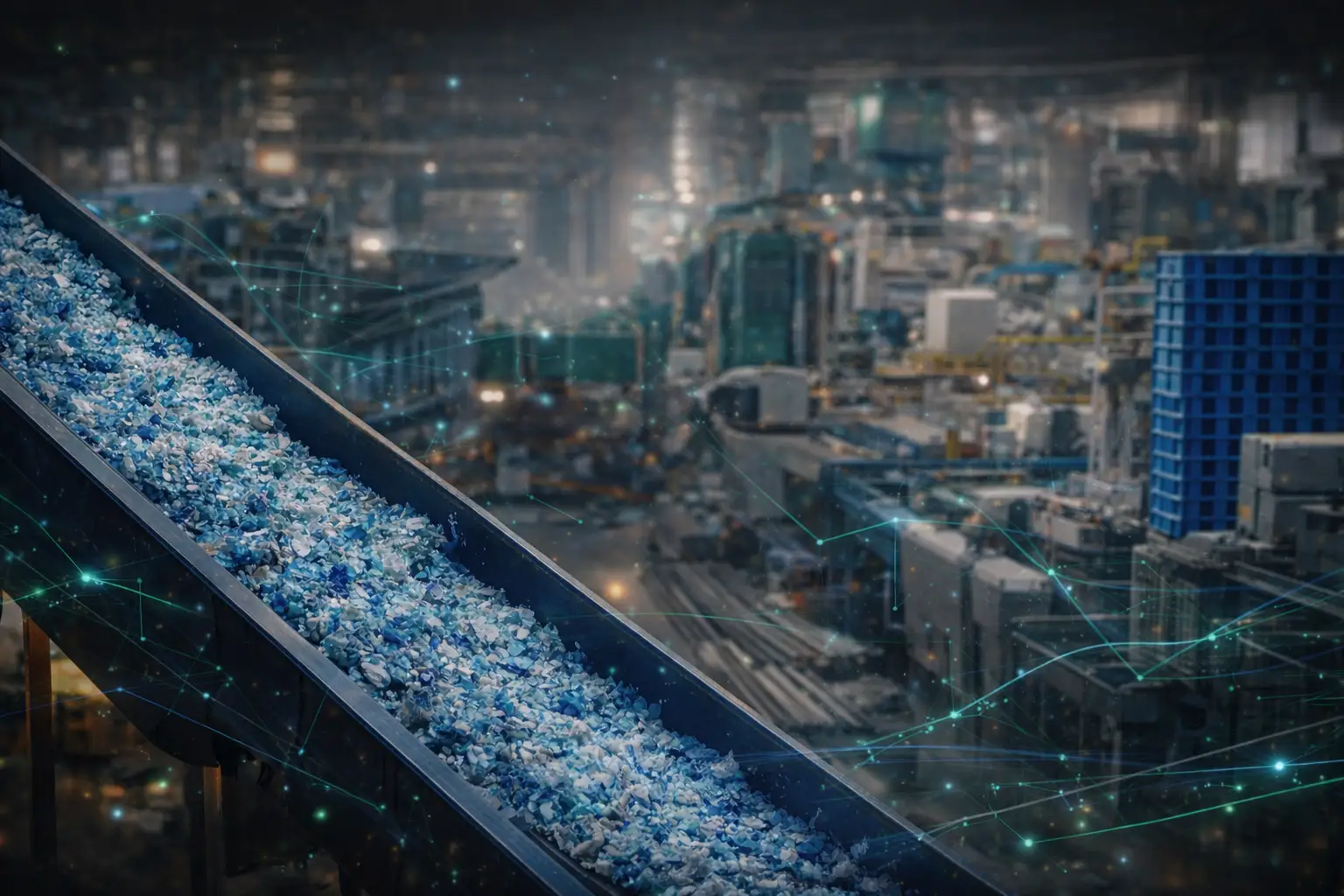
Buy Plastic Scrap in the USA Complete Guide for Recyclers to Find Manufacturers Suppliers and Reliable Feedstock
Buying plastic scrap is a feedstock procurement decision, not a search for the lowest price per pound. A recycler can buy an inexpensive load and still lose money when moisture, mixed polymers, metal, freight, sorting and low recovery yield are included. A higher priced factory stream may deliver a lower usable cost because its resin, source, form and variation are controlled. Successful buyers compare delivered usable material, processing performance and continuity rather than headline price alone.
This guide is written for U.S. recyclers, reclaimers, compounders, converters, recycled resin producers, manufacturers and traders searching for plastic scrap for sale. It explains how to define a buy specification, locate factories and suppliers, evaluate PP, HDPE, LDPE, PET, PVC, ABS and engineering plastic streams, verify sellers, design samples and trials, calculate delivered usable cost, arrange freight, manage contracts and build recurring supply. It covers parts, runners, bales, rolls, pipe, pallets, totes, lumps, purges, regrind, flakes, off specification resin and recycled pellets.
The central purchasing rule is simple. Buy only the stream that the receiving process and end product can use within a documented operating window. WASTEMARKT helps buyers publish specific requirements, discover seller offers and connect with logistics, laboratories, services and machinery. The platform supports discovery, while buyers remain responsible for supplier diligence, technical approval, lawful receipt, payment, claims and product qualification.
What It Means to Buy Plastic Scrap
A plastic scrap purchase transfers a defined secondary material from a seller to a buyer under agreed quality, quantity, delivery, title, risk, inspection and payment terms. The material may come directly from a manufacturer, through a trader, from a warehouse, from a collection program or from another recycler. The contracting seller and physical source may therefore differ, and both must be understood.
Purchasing can also take forms other than a straightforward delivered load. The buyer may collect at the factory, place a drop trailer, operate a milk run, consolidate small streams, buy after inspection at a warehouse or import a container. A toll processor may handle material without purchasing it. A broker may introduce parties without taking title. Procurement records should identify each role.
A buyer should define its objective before searching. It may need low cost feedstock, a specific grade, natural color, post consumer content, a steady base load, spot material for spare capacity or a closed loop source.
Different objectives require different suppliers, evidence and contracts. A broad request for any plastic scrap attracts volume but rarely creates an efficient purchasing program.
Build the Buy Specification First
The buy specification translates the receiving process into supplier language. Start with polymer and accepted grade families, source applications, production processes, physical forms, color, additives, fillers, reinforcement, moisture, other polymers, metal, paper, rubber, dirt, odor and prohibited items. State which values are limits, target ranges or source restrictions and identify the test method and conditions.
Add operational requirements: minimum and maximum lot size, packaging, bulk density, particle size, bale or roll dimensions, loading or delivery, geographic radius, sample quantity, trial load, inspection time and forecast. Define whether PIR, PCR or both are accepted. If the product requires certifications, customer approval or controlled content, list the supporting documentation without implying that a certificate replaces actual testing.
Review the specification with purchasing, quality, production, maintenance, logistics, environmental and sales teams. A feedstock can pass laboratory tests yet fail unloading, conveying, filtration or final product requirements. Publish only requirements that the plant is prepared to execute and update the marketplace listing when the operating window changes.
| Specification layer | Buyer defines | Reason it matters |
| Material identity | Polymer grade source process color and additives | Separates broad resin names from usable feedstock |
| Quality window | Moisture contamination ash metal odor and property limits | Supports consistent yield and product performance |
| Physical form | Parts bales rolls pipe regrind flakes purge or pellets | Determines handling preparation and equipment |
| Commercial volume | Lot size frequency forecast and seasonality | Allows production inventory and cash planning |
| Logistics | Origin radius packaging weight loading and delivery basis | Defines realistic delivered economics |
| Approval process | Documents sample tests trial inspection and change control | Turns a lead into a repeatable qualified source |
Where Plastic Scrap Supply Comes From
Direct manufacturing sources include injection molding, blow molding, extrusion, film and packaging conversion, thermoforming, pipe and profile, automotive, appliances, electronics, construction products, medical production and consumer goods. Their streams can include runners, sprues, flash, edge trim, startup lengths, rejected parts, off specification rolls, purges and surplus resin. Source control and production records can create strong consistency.
Warehouses and distributors offer damaged packaging, obsolete resin, returned pallets, crates, totes and inventory from product changes. Collection companies and material recovery facilities provide post commercial or post consumer bales that may have larger volume but wider contamination. Dismantlers generate durable goods plastics, often with attachments, paint, labels, fillers or restricted substance questions.
Traders and aggregators can combine regions or small sources into economical loads. Other recyclers may sell flakes, regrind, fines, agglomerate or pellets. Each additional transfer can add value through preparation and logistics, but it can also weaken source visibility. Buyers should know the physical origin, preparation history and chain of custody required for their intended product.
Post Industrial and Post Consumer Feedstock
Post industrial material is generated during manufacturing before a product completes its intended consumer use. Post consumer material has completed its use and typically passes through collection and sorting. Internal rework may remain inside the manufacturing system and never enter a scrap sale. These categories influence contamination, traceability, claims and possible end uses, but they are not complete quality grades.
A factory stream can still contain print, adhesive, barriers, color change material, degradation and mixed grades. A properly sorted and washed PCR stream can be more consistent than an uncontrolled industrial mixture. Buyers should qualify measurable properties and source rules instead of assuming that PIR always means clean or PCR always means low quality.
If recycled content or customer reporting depends on the source category, require records that connect the material with its actual route. Purchase invoices alone may not establish post consumer status, recovered yield or final application. Define the accounting boundary before contracts begin.
Forms of Plastic Scrap for Sale
Whole parts, runners and offcuts preserve visual and source evidence but can have low bulk density or require size reduction. Bales improve density for film, bottles and rigid items, although a bale does not guarantee polymer purity. Rolls can retain gauge, width, layer construction and grade information that disappears after baling or shredding.
Regrind and flakes are size reduced materials with different particle distributions and preparation histories. The terms do not guarantee washing, drying, screening or metal removal. Agglomerate and densified material can improve feeding and transport for films and foams. Powder and fines may require dust controls and specialized dosing.
Purges and lumps range from clean single grade masses to degraded mixtures with metal. Recycled pellets may be simple extruded scrap, filtered reprocessed resin or a compounded product with documented properties. Buyers should request the preparation flow, test data, packaging and retained samples for each form.
Buying Polypropylene Scrap
PP sources include injection runners, crates, totes, caps, automotive parts, sheet, fiber, nonwoven, woven bags, lumps, purges, regrind and pellets. Homopolymer, random copolymer, impact copolymer, PP EPDM, mineral filled and glass reinforced materials are not interchangeable. Melt flow, ash, impact modification, color, odor and metal can determine the outlet.
Ask for original grade and process, part or product, filler, reinforcement, color, source control and normal changeovers. A natural cap regrind differs from black automotive TPO or talc filled appliance PP. Buyers should avoid a broad buy PP scrap request when only one narrow compound or melt range can run.
Buying HDPE Scrap
HDPE purchases can include bottles, drums, crates, pallets, pipe, sheet, blow molding flash, injection runners, lumps, purges, regrind and pellets. Natural blow molding material, mixed color rigids and black pipe have different density, melt, oxidation and application characteristics. Former contents and cleaning are important for containers.
For pipe, record grade family such as PE80, PE100 or PE4710 where relevant, markings, service exposure, carbon black, oxidation, fittings and metal attachments. Clean factory cutoffs differ from excavated post use pipe. State acceptable dimensions and whether the supplier or buyer provides cutting and grinding.
Buying LDPE and LLDPE Film Scrap
Film feedstock includes clean edge trim, stretch film, shrink film, bags, liners, agricultural film, printed film, off specification rolls, bales, agglomerate, regrind and pellets. Ink, paper, labels, adhesive, moisture, dirt, aluminum, PET, PA and EVOH can change washing, extrusion and final film properties.
Specify monolayer or multilayer, clear or colored, printed fraction, source and permitted barrier content. A buyer operating a dry clean film line has a different window from a wash plant. Roll stock may support direct reuse or conversion, so record width, gauge, core, construction and winding before processing destroys that information.
Buying PET Scrap
PET can be purchased as bottle bales, thermoform bales, preform scrap, sheet trim, fiber, strapping, lumps, washed flake, fines or recycled pellets. Clear bottles, colored bottles, thermoforms, sheet and textile sources require different preparation and intrinsic viscosity. PVC, PLA, PETG, labels, closures, moisture and metal are important contaminants.
Washed flake specifications often address color, particle size, moisture, bulk density, PVC, polyolefin and metal. Food contact or bottle to bottle use requires the exact source, recycling process, material and intended conditions to meet relevant technical and regulatory requirements. A prior food package does not itself approve the recovered feedstock.
Buying PVC Scrap
PVC supply includes rigid profile, pipe, siding, sheet, flooring, cable compound, flexible film and controlled production trim. Rigid and flexible formulations differ in plasticizer, filler, stabilizer and end use. Aluminum reinforcement, copper, rubber seals, backing, labels and former contents can require dismantling or specialized processing.
Keep PVC separate from PET and incompatible polymer routes. A buy request should identify rigid or flexible, original product, formulation where known, color, filler, attachments and restricted substance expectations. Used construction and cable materials need source specific review rather than a generic PVC designation.
Buying ABS and Other Styrenics
ABS, HIPS, GPPS, EPS, SAN and ASA appear in electronics, automotive, appliances, sheet, packaging and construction. PC ABS is a distinct blend, and HIPS should not be treated as GPPS. Paint, plating, rubber modification, flame retardants, food residue and other polymers affect processing and markets.
Tests can include FTIR, melt flow, impact, density, ash, thermal behavior, color and restricted substance screening. EPS and EPP require close attention to bulk density and freight; compaction can extend the supply radius when chemistry and contamination remain controlled.
Buying Engineering Plastic Scrap
Engineering feedstock includes PA6, PA66, PC, PC ABS, PMMA, POM, PBT, TPU, TPE and technical blends. Clean factory runners and rejects with full grade codes can be valuable, but specifications are narrow. Glass fiber, mineral filler, flame retardants, heat history, hydrolysis, moisture, viscosity and color determine performance.
Do not purchase on trade name alone when several grades share a brand family. Require grade records, source application, reinforcement and representative tests. Automotive and electrical streams may need part number control and restricted substance review. A trial should evaluate both processing and the intended compound or product.
How to Find Manufacturers and Suppliers
Search by transaction intent, polymer, form, process and location. Buy HDPE pipe scrap in Texas, buy clear LDPE film rolls in Georgia or source PA66 GF30 injection runners in Ohio produces stronger leads than buy plastic waste alone. Use WASTEMARKT offer categories, supplier profiles and wanted material listings to make the requirement visible to relevant factories.
Manufacturing directories, trade associations, resin and equipment networks, industry events and current service partners can help identify sources. A company that consumes a polymer is not automatically a scrap supplier, and a factory may be contractually unable to sell customer owned material. Every lead requires direct confirmation of ownership, generation point, volume and source control.
Build supply through multiple channels without losing specification discipline. A direct factory program can provide consistency, a trader can fill geographic gaps, and a warehouse can consolidate small lots. Record the original source and the value added at each step so price and risk remain understandable.
How to Publish a Wanted Material Listing
A high converting buy request names the exact feedstock. A title such as Wanted Natural HDPE Blow Molding Regrind from Factory Sources in the Midwest tells suppliers more than Buying All Plastic. State polymer, grade or accepted source, process, color, form, properties, contamination limits, volume, packaging, region, delivery basis, sample and trial requirements. Explain prohibited materials and normal documentation. If several grades are accepted under different prices or uses, publish separate requirements or a clear matrix. Avoid advertising a price that assumes ideal quality
without stating the specification and delivery basis. Suppliers should be able to decide whether their stream fits before sending a sample.
Ask sellers to include photographs, origin, current inventory, recurring generation, test data and loading details. WASTEMARKT can index the requirement by material and geography and connect it with current offers. Review and refresh the post when capacity, price basis or acceptance changes.
| Supply source | Typical strength | Typical uncertainty | Buyer control |
| Direct factory | Traceable recurring process scrap | Production changes and limited preparation | Source map change control and pickup standard |
| Warehouse or distributor | Obsolete inventory and consolidation | Storage history ownership and mixed lots | Lot documents inspection and segregation |
| Collector or MRF | Larger post commercial or PCR volumes | Contamination composition and moisture variation | Bale specification sampling and sort study |
| Trader or aggregator | Regional access mixed volume and logistics | Original source chain title and claims | Source disclosure contract roles and retained samples |
| Recycler or processor | Prepared flakes regrind or pellets | Process history yield and property consistency | COA methods audit and product trial |
Supplier Qualification
Confirm legal company name, trade name, physical source, warehouse and authorized seller. Review the relationship between the invoice entity and material owner. Verify addresses and contacts using independent sources. Contract manufacturers may hold customer owned scrap, so authority to sell and brand restrictions must be clear.
Evaluate the source process, collection method, storage, packaging, inspection and change controls. Ask who can modify resin, additives, products or containers. A site visit or live video review can confirm generation and storage for a major recurring program without requiring disclosure of unnecessary proprietary information.
Commercial diligence includes references, credit, insurance, tax documentation, banking and performance. Technical quality does not eliminate payment or fraud risk. Approve the supplier, source and material as a defined combination and reverify important changes.
The Supplier Information Package
Request a one page material summary, source diagram, technical and safety documents, production quantities, normal variation, photos, test results, packaging, loading and sample history. Original resin technical data supports grade history but does not prove the properties of processed scrap. Separate verified facts from estimates and inherited information. The package should state current inventory and recurring generation separately. Include production dates, shifts, sites and whether multiple sources are combined. For post consumer material, describe collection,
sorting, washing and preparation. For recycled pellets, describe extrusion, filtration, blending, additives and certificate methods. Use version control and a stream ID. When grade, source, process, packaging or testing changes, the supplier should issue an updated package before shipment. A buyer must not rely on an old specification because the price or production schedule is urgent.
Representative Sampling
A representative sample captures variation across containers, dates, shifts and depths. The seller should collect documented increments, combine them and divide the composite into buyer, seller and retained portions. The buyer may witness or audit sampling when the lot is high value or variable. Label all portions with stream, lot, date, sampler and custody.
Sample size depends on particle and contamination distribution. A handful cannot represent large parts, bales or an intermittent metal problem. For bales, consider multiple bale cores or a controlled break out. For pellets or regrind, sample from several containers and levels rather than only the top.
Agree on sample disposition and confidentiality. Retained material should remain available through the claim period. Passing a sample is a gate to a commercial trial, not a permanent approval for all future production.
Laboratory Tests for Plastic Feedstock
Test selection follows the resin, process and end use. Common tools include FTIR for polymer screening, melt flow, density, moisture, ash, filler or glass content, particle size, color, odor, intrinsic viscosity for PET, thermal analysis, metal detection and manual contamination sorting. Technical polymers can require mechanical or application specific testing.
Methods and conditions must be recorded. Melt flow changes with temperature and load, moisture depends on conditioning, and ash does not by itself identify the filler. A result without method, date, lot and sample basis should not be treated as directly comparable. Buyers should calibrate internal and outside laboratory procedures.
A resin identification code describes a broad polymer family and does not guarantee recycling compatibility, local acceptance or grade. ASTM D7611 is a reference for resin identification coding. Unknown, blended, filled and multilayer materials can require more than one method.
Calculating Delivered Usable Cost
Delivered usable cost measures what the buyer pays for the material that remains usable after freight, moisture, contamination, sorting, processing loss and residuals. Start with purchase price, add freight, packaging or handling, brokerage, inspection and preparation. Subtract nonusable mass and divide total delivered cost by recovered usable pounds.
For example, two loads can share the same delivered price but produce different costs when one has higher moisture or lower recovery yield. A clean factory regrind may cost more per gross pound and less per usable pound than a mixed bale. Use normal trial results rather than optimistic laboratory yield.
Add the cost of production disruption, filter changes, labor, wastewater, energy, residual disposal and claims where material quality affects them. Procurement savings should be measured against actual process and product performance, not only invoice variance.
| Cost element | Buyer calculation | Evidence source |
| Material price | Gross or net price under the agreed weight basis | Quote purchase order and scale ticket |
| Inbound logistics | Freight fuel accessorials packaging and unloading | Carrier quote invoice and site records |
| Nonusable mass | Moisture contamination sorting loss and residuals | Inspection tests sort study and mass balance |
| Processing cost | Labor energy washing grinding extrusion filtration and testing | Trial operating data and standard cost |
| Usable output | Qualified recovered product after normal process loss | Mass balance COA and product approval |
| Risk allowance | Expected claims downtime variability and payment exposure | Historical supplier and lot performance |
Comparing Supplier Quotes
Normalize price to the same unit, weight and delivery basis. Record EXW, pickup, FOB, delivered or other term; gross or net weight; moisture and contamination deductions; packaging; freight; testing; brokerage; payment; validity and minimum quantity. Do not compare a delivered quote with a factory pickup quote as though they are identical.
Score specification fit, source traceability, consistency, volume, logistics, response, contract terms and risk alongside delivered usable cost. A low price with uncertain ownership, inconsistent lots or no retained sample can create more expense than it saves. Availability should also match the buyer’s production plan.
Keep a dated quote register by resin, grade, form, location and source. The WASTEMARKT Price Index can provide market context, while the final purchase price depends on the actual feedstock, yield, freight and transaction. Do not turn an index into a guaranteed bid without the specification.

The Commercial Trial Load
The first full load should represent normal future supply and use the proposed packaging and route. Confirm lot, quantity, photos, test results, price, freight, inspection, payment and remedies before pickup. Retain a matched sample and use a seal when appropriate.
At receipt, document trailer, packaging, gross and tare weights, moisture, contamination, identity and safety exceptions. Track sorting, grinding, washing, drying, filtration, yield, residuals, process stability and final product tests. A mass balance should explain where received pounds went.
Issue a written approval, conditional approval or rejection. The approved operating window should name source, resin, grade, form, color, packaging, test limits and frequency. Do not convert one favorable trial into an unlimited approval for unknown sites or materials.
Freight and Pickup Strategy
Freight radius depends on value, density and load weight. Dense regrind, pellets and compact bales can travel farther than loose film, foam, hollow parts or assembled products. Measure actual net pounds per container and full trailer. A small increase in density can change the viable supply map.
Buyer pickup gives control of carrier and schedule but adds dispatch work. Seller delivery can simplify procurement while hiding freight assumptions. Drop trailers support continuous generation where space and volume justify them. Milk runs and consolidation can serve small sources when polymer identity remains protected.
Define dock, forklift, trailer, appointment, loading time, weight distribution, securement, seals, detention and failed pickup. Verify the actual carrier. The FMCSA SAFER Company Snapshot can provide identification and selected safety information for U.S. motor carriers; it does not verify the supplier or material.
Packaging and Receiving Standards
Approve package type, size, weight and closure before purchase. Gaylords need suitable pallets, liners and lids. Bulk sacks require compatible lifting loops and discharge. Bales need size, density, wire and integrity controls. Rolls need width, outside diameter, core and winding condition. Pipe and profiles need safe lengths and bundles.
Every unit should show supplier, site, stream ID, polymer, grade or source, color, form, net weight or count, production dates and exceptions. Mixed lots require separate identification even when they share a trailer. Receiving teams should quarantine material until the required inspection is complete.
Packaging failures can contaminate material or injure workers. Define responsibility for broken pallets, leaking liners, loose wire, unstable stacks and weather exposure. Photographs at loading and receipt help determine where damage occurred.
Purchase Contracts
The purchase order or agreement should identify buyer, seller, material source, specification, quantity, forecast or commitment, price, adjustment, weight basis, packaging, freight, title, risk, payment, taxes and duration. It should name any trader, warehouse, carrier or processor whose role affects title or execution.
Quality terms should define sampling, methods, limits, inspection location, notice period, retained samples, price adjustment, rework, lawful return and residual costs. Rejection should not remain an undefined option. State what happens when a safety contaminant differs from a minor property deviation.
Recurring supply requires forecast rules, minimum or maximum volume, change control, confidentiality, brand protection, insurance, audits, termination and disputes. Legal counsel should adapt terms to the jurisdictions and material. Platform messages support the record but do not replace the formal agreement.
Payment and Fraud Prevention
Payment can occur in advance, at pickup, after received weight, after inspection or on approved credit terms. The structure should match supplier history, material risk and transaction size. Define which documents trigger the invoice and when deductions are final. Long open inspection periods create disputes and working capital uncertainty.
Verify bank instructions through known contacts and an independent channel, especially when details change. Compare beneficiary, seller and invoice entity. Treat unusual urgency, copied images, inconsistent names, unrelated accounts, changing pickup sites and pressure to bypass controls as reasons for enhanced review.
If cyber enabled fraud is suspected, stop transfers, contact the financial institution promptly and preserve communications and documents. The FBI Internet Crime Complaint Center is the central U.S. reporting hub for cyber enabled crime. Internal finance, purchasing, logistics and receiving teams should share escalation procedures.
Claims and Nonconforming Material
A buyer claim should identify purchase order, lot, date, received weight, specification item, method, result, photographs and affected quantity. Quarantine the material and preserve samples for joint review. General descriptions such as dirty or bad material are insufficient to determine cause or cost.
Compare sampling, conditioning and test methods. Moisture and melt values can differ when procedures change. A mutually accepted laboratory can resolve technical disputes. Container and production records can trace visible foreign material to a source or handling stage.
Use the agreed remedy: acceptance, documented adjustment, sorting, rework, authorized return or alternate lawful outlet. Corrective action should identify root cause, owner, due date and evidence. Repeated problems may require retraining, new containers, price change, requalification or suspension.
Recurring Feedstock Programs
After trial approval, establish a supply standard with stream IDs, source points, containers, labels, inspection, pickup triggers, forecasts, contacts and escalation. Both buyer and supplier should train their teams. The program should work during all shifts, maintenance and production changes.
Change control covers resin, grade, supplier, additive, color, product, label, process, site, storage and packaging. The seller notifies the buyer before shipping changed material. The buyer decides whether updated documents, a sample or a new trial are required and notifies the seller when its specification or capacity changes.
Monitor received pounds, usable yield, delivered cost, contamination, weight variance, on time delivery, claims, corrective actions and payment. Keep more than one qualified source where business continuity requires it, while protecting the predictable volumes that allow good suppliers to invest in segregation and preparation.
Supplier Performance Scorecard
A supplier scorecard should combine technical, logistics, commercial and documentation performance. Use comparable periods and enough volume to avoid overreacting to one event. Separate severe safety or prohibited contamination from minor variation. A single critical failure can require immediate containment even when the average score is high.
Review results with suppliers and connect poor performance with corrective action. Reliable sources can earn longer agreements, preferred pickup schedules or higher allocation. The scorecard should support improvement and purchasing decisions, not replace investigation of individual claims.
| Performance area | Example measure | Purchasing use |
| Quality conformity | Lots within identity moisture contamination and property limits | Approve allocation or require corrective action |
| Recovered yield | Usable output divided by received dry input | Compare true feedstock performance |
| Delivery reliability | Loads within agreed quantity and appointment window | Plan production inventory and trailers |
| Documentation | Complete lot labels COA source and shipping records | Protect traceability and claims |
| Claims | Frequency severity response and closure time | Adjust risk limits and approval status |
| Commercial accuracy | Invoice price weight deductions and payment alignment | Reduce administrative and cash disputes |
Buying from Traders and Aggregators
A trader can create value by finding sources, consolidating small lots, arranging freight, providing credit or managing regional relationships. The buyer should know whether the trader owns the material, acts as an agent or invoices on behalf of another company. Define who controls quality and who pays a claim.
Request original source information to the level required by the product and contract. If several sources are combined, establish blending, allocation and change rules. A successful sample from one factory does not qualify an aggregated load from unknown origins.
Keep delivery instructions, purchase order, invoice and receiving site consistent. An unexplained third party payment or last minute destination requires verification. The commercial convenience of a trader should not make title, source or compliance ambiguous.
Buying Regrind and Recycled Pellets
Prepared feedstock can reduce internal grinding, washing or extrusion, but it adds dependence on the supplier’s process. Ask for input sources, sorting, washing, drying, extrusion, filtration, screen pack, blending,
additives, quality plan and residual management. Regrind is not automatically clean, and pellets are not automatically a certified compound. A certificate of analysis should identify lot, methods and results. Verify how samples are selected and how often properties are tested. Retain incoming samples and link them to production batches. A supplier data sheet describes a target; it does not replace lot acceptance.
Run processing and product trials at intended blend levels. Evaluate moisture, feeding, filtration, color, odor, mechanical properties and long term consistency. Contract change control should cover input source and formulation, not only the pellet name.
Food Medical Automotive and Controlled Uses
Food contact use requires evaluation of the exact recycled source, process, material and intended conditions under applicable requirements. The FDA provides information for recycled plastics in food packaging. A supplier statement or prior food use does not alone establish suitability for a new application.
Medical and pharmaceutical products can involve sterility, patient contact, biohazard, traceability and customer approval. Automotive and electrical products may require OEM specifications, flame retardants, fillers, restricted substance records and part controls. The buyer must qualify its finished product independently.
Source claims should remain precise. A material can be technically recyclable and still be unsuitable for a particular controlled end use. Purchasing should coordinate with regulatory, quality and customer approval teams before committing recurring volume.
Safety and Environmental Controls
Plastic scrap can carry metal, batteries, chemicals, oils, pressurized items, sharp parts, unstable bales and combustible dust. The receiving site should define prohibited hazards, inspect loads and communicate emergency procedures. Former contents and cleaning must be disclosed for containers and process waste.
Grinding and handling fine plastic can create dust risks. Equipment guarding, housekeeping, dust collection, ignition control, forklift movement, bale wires, roll handling and storage need site specific evaluation. Buyers should use qualified safety professionals and current OSHA and local requirements.
Material classification and recycling obligations depend on composition, source, management and jurisdiction. Positive value does not automatically eliminate regulatory duties. Verify that the seller can lawfully ship and that the buyer can receive, process and manage residuals.
Recycled Content and Environmental Claims
Buying scrap creates feedstock records, but it does not by itself prove recycled content in a finished product. Track received dry input, process losses, recovered output, blending and product allocation under a defined method. Distinguish PIR, PCR, internal rework, reuse, recycling, energy recovery and disposal.
Closed loop should describe an actual return to the same or a defined product system. A material purchased from a trader without traceable origin should not be called closed loop solely because it is recycled. Certificates need supporting mass and process evidence.
The FTC Green Guides are an important U.S. reference for avoiding misleading environmental claims. Review current guidance and substantiate recyclable, recycled content, certification and general environmental benefit statements. Buyer and supplier marketing language should match the documented material route.
Domestic Sourcing and Imports
Domestic sourcing can simplify audits, samples, lead time and disputes while still involving state requirements and long freight distances. Imports can access different grades, volumes or economics but add customs, ocean freight, documents, inspections, delays, contamination risk and international waste controls.
Verify exporter, importer, source, receiving route and material classification before booking. Review U.S. requirements, origin rules, transit and relevant agreements. EPA explains that several international agreements can affect U.S. transboundary waste shipments. The legal path depends on the exact material and countries.
Incoterms can allocate delivery costs and risk for goods, but they do not replace customs, environmental or product compliance. Compare imported material after freight, demurrage, inspection, working capital, claims and lawful return. Never ship while the receiving or return route is unresolved.
State Opportunities for Feedstock Sourcing
Industrial supply follows polymer conversion, packaging, automotive, building products, distribution, recycling and ports. The following state themes guide prospecting and do not guarantee available offers. Buyers should combine location with resin, process, form and volume in every search.
| State | Likely supply sources | Buyer sourcing focus |
| Texas | Petrochemicals pipe film blow molding packaging and ports | Large PP and PE streams Gulf freight and export import routes |
| California | Packaging agriculture film electronics consumer goods and distribution | Traceable film PET PCR and current state requirements |
| New York | Packaging distribution healthcare construction and urban recovery | Northeast consolidation delivered cost and recurring pickups |
| Florida | Packaging agriculture construction marine logistics and ports | Moisture control film rigid sources and ocean logistics |
| Georgia | Film pipe automotive carpet manufacturing and warehousing | Factory trim Southeast freight and supplier programs |
| Illinois | Food packaging equipment distribution molding and compounding | Midwest source diversity regrind and consistent loads |
| State | Likely supply sources | Buyer sourcing focus |
| Ohio | Automotive injection molding appliances pipe and machinery | PP ABS PA engineering scrap and factory relationships |
| New Jersey | Chemicals packaging pharmaceutical distribution and ports | Controlled sources laboratory documents and imports |
| Michigan | Automotive PP TPO engineering plastics and returnable packaging | Part identified sources OEM controls and compound feedstock |
| Louisiana | Petrochemicals pipe film industrial packaging and Gulf ports | Large PE PP supply process scrap and port access |
How WASTEMARKT Supports Plastic Scrap Procurement
WASTEMARKT gives recyclers, compounders, converters, traders and recycled resin producers a place to publish wanted material requirements and search seller offers by polymer, form and location. Categories can cover PP, HDPE, LDPE, PET, PVC, ABS, PA, PC, PMMA and other materials as parts, bales, rolls, pipes, pallets, totes, purges, regrind, flakes and pellets.
Company profiles and messaging support first qualification. The Price Index can provide market context. Logistics, warehouse, recycling service, laboratory and machinery categories help buyers solve preparation and freight needs around the feedstock. These tools support discovery without replacing samples, audits, contracts, credit review, permits or product approval.
A buyer should publish one precise requirement for each materially different input, state current capacity and reply with a consistent qualification process. Suppliers should publish source based offers. That structure converts broad marketplace traffic into technically relevant inquiries and recurring supply programs.
Buyer Readiness Checklist
Confirm the receiving line, product, polymer, accepted grades, source, form, color, additives, contamination, moisture, tests, volume, packaging and region. Define a realistic price and delivery basis, sample plan, trial load, inspection and approval authority. Make sure production, quality, purchasing and logistics use the same specification.
Create supplier diligence, credit, fraud and compliance steps. Prepare containers, freight, receiving, quarantine and retained sample procedures. Calculate delivered usable cost with trial data. Put purchase, weight, deductions, claims, payment and change control in writing.
Publish the requirement on WASTEMARKT and build a qualified source list. Start with a representative sample and normal trial. Scale only after source, quality, logistics, yield and commercial execution are proven. Review performance and maintain contingency sources appropriate to production risk.
Supplier Response Checklist
A supplier responding to a buy request should provide legal identity, physical source, authority to sell, resin and grade, original application, process, color, additives, form, PIR or PCR status, contamination, tests, inventory, recurring volume, location, packaging and loading. Photos should show the complete normal material, not only selected clean pieces.
State normal variation and changes. Provide a representative sample under the buyer’s plan and retain a matching portion. Quote on the requested unit and delivery basis. Confirm payment beneficiary, pickup contacts and receiving instructions independently when required.
Frequently Asked Questions About Buying Plastic Scrap
Where can I buy plastic scrap in the USA ?
Buyers can search factory and supplier offers on a B2B marketplace such as WASTEMARKT and publish detailed wanted material requirements by polymer, form, source and location.
Who sells post industrial plastic scrap ?
Injection molders, extrusion plants, blow molders, film converters, pipe and profile producers, automotive suppliers, warehouses, distributors, recyclers and qualified traders can offer post industrial streams.
What information should a plastic scrap buy request include ?
State polymer, grade or source, process, color, additives, form, contamination limits, tests, volume, packaging, geography, sample, trial and delivery basis.
Can I buy plastic regrind directly from manufacturers ?
Yes. Many factories generate runners, trim, rejects and purges that can be segregated and ground, but the buyer must qualify source, preparation, particle size, contamination and consistency.
Can I buy off specification resin ?
Yes, when the reason for nonconformance, lot, storage, packaging, properties and restrictions are disclosed and fit the buyer’s process. It should not be treated as prime without proof.
What is the difference between PIR and PCR feedstock ?
PIR is generated during manufacturing before consumer use. PCR comes from products after use. Each category still requires a technical specification and source evidence.
How do I verify a plastic scrap supplier ?
Check legal identity, physical source, authority to sell, collection and storage, quality controls, documents, references, payment details and performance through samples and a normal trial.
What sample should I request ?
Use a representative composite collected across containers, dates, shifts and depths, divided into buyer, seller and retained portions with lot identity and custody.
Which tests are used for plastic scrap ?
Depending on material and use, tests can include FTIR, melt flow, density, moisture, ash, filler, intrinsic viscosity, particle size, color, metal, thermal analysis and contamination sorting.
Does a resin code prove the material is acceptable ?
No. It identifies a broad polymer family and does not prove grade, composition, recyclability, local acceptance or compatibility with a particular line.
How is delivered usable cost calculated ?
Add purchase, freight and preparation costs, account for moisture, contamination, yield loss and residuals, then divide total delivered cost by qualified usable output.
Why can a higher priced scrap be cheaper to process ?
A consistent dense clean stream can create higher yield, lower sorting, less downtime and fewer residuals, producing a lower cost per usable pound.
Should the first full load be a trial ?
Yes. A commercial load tests packaging, variation, receiving, preparation, processing yield and final product behavior that a small sample cannot fully show.
Who should arrange freight ?
Buyer, seller or a third party can arrange it. The agreement should state delivery basis, carrier, costs, loading, title, risk, delays and accessorial charges.
How can I check a U.S. motor carrier ?
The FMCSA SAFER Company Snapshot allows searches by USDOT number, MC or MX number, or company name and provides identification and selected safety information.
What belongs in a plastic scrap purchase contract ?
Include parties, source, specification, quantity, price, weight, packaging, freight, title, payment, inspection, claims, rejected material, change control and termination.
How should a buyer handle a rejected load ?
Quarantine it, preserve samples and evidence, follow the inspection process, compare methods and use the agreed lawful remedy such as adjustment, rework, return or alternate outlet.
Can I import plastic scrap into the United States ?
Potentially, but material classification, origin, U.S. and transit requirements, international agreements, customs, receiving authorization, documents and return route must be reviewed before shipment.
Can recycled plastic be bought for food contact use ?
Only after the exact source, recycling process, material and intended conditions meet applicable technical and regulatory requirements. Resin identity or former food use alone is insufficient.
How does WASTEMARKT support recurring feedstock ?
Buyers can post precise requirements, search offers and connect supply with company profiles, logistics, services, machinery and market context while completing their own technical and commercial diligence.
Conclusion
The best way to buy plastic scrap in the USA is to begin with the receiving process and work backward to a defined source. Polymer name and price are insufficient. Buyers need source, grade, form, contamination, evidence, volume, freight, usable yield and supplier performance to align before a recurring purchase becomes reliable.
WASTEMARKT can help recyclers and manufacturers publish demand, find direct factory offers and connect procurement with logistics, services, testing, machinery and market information. A precise wanted listing, qualified supplier, representative sample, commercial trial, delivered usable cost model and written change control create a stronger feedstock program than opportunistic purchases based only on headline price.
POST DEMAND | FIND SUPPLIERS | SECURE RECURRING FEEDSTOCK
Source factory scrap regrind bales purges rolls off specification resin and recycled pellets on WASTEMARKT
Register and publish your material requirement at www.wastemarkt.com


